Rummy How-To: Build a Personal Discard Hierarchy
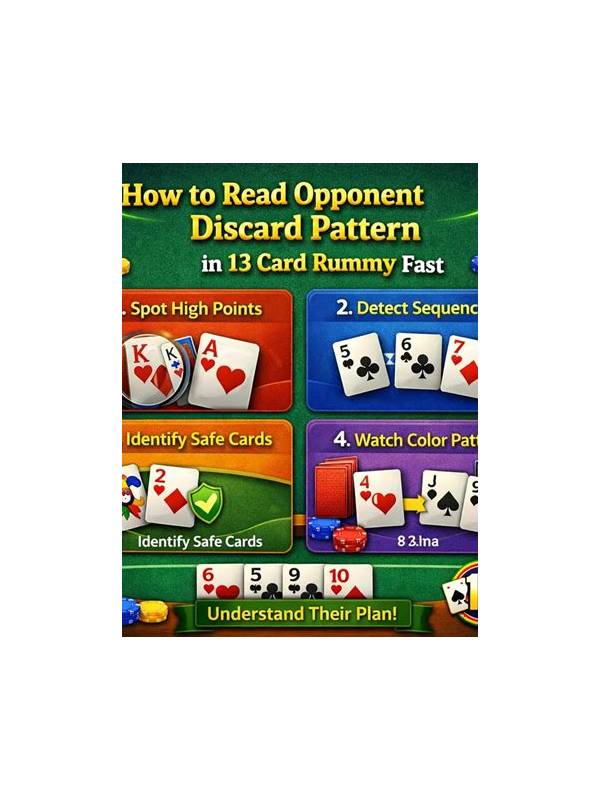
A discard hierarchy is a personal order of preference for releasing cards. It does not replace reading the current hand, but it prevents every decision from starting from zero. Building one is especially helpful when several cards look nearly equal.
Start with cards that have no credible group role. A high-point card with no neighbor, pair, or set possibility may be the first candidate because it creates exposure without supporting progress. Next consider duplicated cards that do not improve any existing group. Do not discard automatically: check whether the duplicate is helping a set or protecting a useful route.
After obvious candidates, rank partial groups by repair cost. A two-card structure that needs one of several nearby cards may be safer than a pair that needs one exact rank. A card’s position matters too. Middle cards often have more sequence connections than edge cards, but flexibility is valuable only when the hand can actually use it. Treat broad theoretical potential as weaker than a clear current role.
Include information risk in the hierarchy. A discard that strongly confirms your plan may tell opponents more than a neutral card. This should be a small adjustment, not a reason to invent elaborate stories about their hands. Public evidence is useful when combined with your own structure, but it should not override a clearly dangerous card without good reason.
Test the hierarchy across several hands. Write down the first candidate, the card you chose, and what changed after the next draw. If the same category repeatedly causes trouble, refine its position. For example, you may learn that a low-point pair with no exit is worse than a single high card with two realistic routes.
Keep the hierarchy short. Three or four levels are enough: release first, consider next, protect for now, and avoid releasing. A long list creates false precision. The hierarchy is a starting filter; the current hand supplies the final evidence. When a decision feels difficult, compare candidates by role, repair cost, point exposure, and information risk. That sequence turns intuition into a process without making play mechanical. Keep the hierarchy short. Three or four levels are enough: release first, consider next, protect for now, and avoid releasing. A long list creates false precision. The hierarchy is a starting filter; the current hand supplies the final evidence. When a decision feels difficult, compare candidates by role, repair cost, point exposure, and information risk. That sequence turns intuition into a process without making play mechanical.
Revisit the hierarchy when the format changes. Different table rules, hand sizes, and joker treatments can change which cards are genuinely flexible. Record the context beside your notes. A hierarchy is a guide for a particular environment, and its value comes from being updated with evidence rather than followed blindly.
Related Post

Rummy Break Planning for Longer Practice Sessions
Planned pauses protect attention and help players notice when tired decisions are replacing deliberate choices. [...]
Rummy App Privacy Settings Worth Checking Before Your First Game
Review a few ordinary privacy controls before creating a profile or joining online tables. [...]