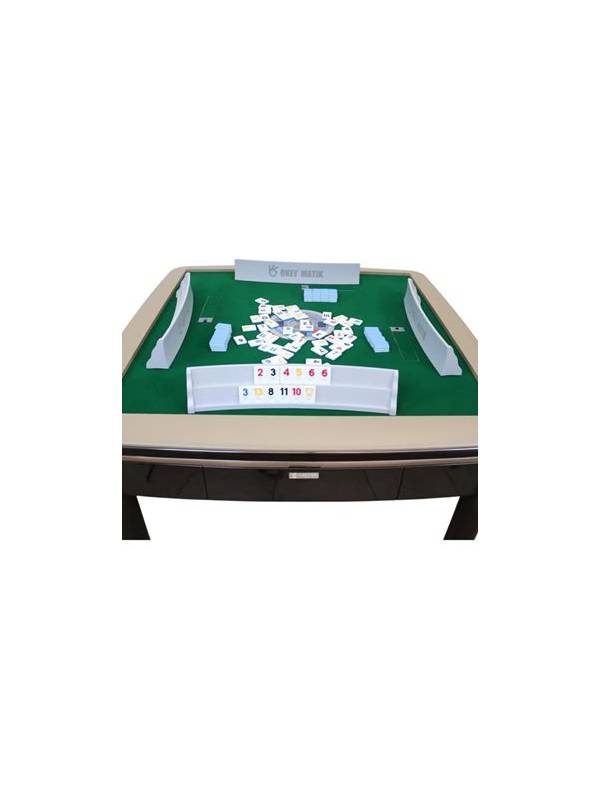
Rummy Guide: Separate Table Facts From Assumptions

Rummy creates a steady stream of incomplete information. You can see your own cards and some discards, but you cannot see every opponent’s plan. Problems arise when a reasonable guess quietly becomes a fact. Separating the two helps you stay flexible and prevents a single interpretation from controlling the hand.
This habit is valuable even when your guess is often correct. A correct guess reached through weak evidence can still produce a poor decision if the cost of being wrong is large. Treat confidence as part of the information. High-confidence facts can guide a commitment; low-confidence assumptions should usually support a reversible move.
When in doubt, choose a move that remains acceptable under two or three plausible explanations. That kind of resilience is often more useful than trying to identify the one hidden story that explains every action at the table.
Start with visible facts. These include the cards in your hand, the cards in the discard area, the number of cards an opponent has exposed, and the actions that actually occurred. Write them mentally in plain language: “A nine was discarded,” or “the player picked up a card from the visible pile.” Avoid adding motivation to the sentence. Facts are useful because another player could inspect the same evidence and agree.
Then label assumptions. “They need the next ten,” “that discard was a bluff,” and “my opponent is close to declaring” are interpretations. They may be helpful, but they carry uncertainty. Use words such as possible, likely, or unclear. If an assumption would cause you to discard a valuable card, require stronger evidence before acting on it.
A simple test is to ask what new observation would prove the assumption wrong. If you cannot name one, the idea may be too vague to guide a decision. For example, “they may want hearts” can be updated by later pickups or discards. “They definitely have a sequence” is harder to test and should not justify a high-cost reaction by itself.
Keep both lists brief. The purpose is not to become an analyst of every gesture. It is to stop uncertainty from wearing the costume of certainty. Before each important discard, identify one fact supporting the move and one assumption that could make it wrong. If the move still looks sound after that check, take it. If not, preserve a backup route until the table provides clearer information.
Related Post
Rummy Connection Problems: A Calm Recovery Checklist
A practical checklist helps online rummy players protect a hand when a connection becomes unstable. [...]
Rummy Comparison: Visible Discards Versus Unknown Stock Cards
Compare certainty and flexibility when choosing between a known discard and an unseen draw. [...]