Rummy FAQ: What Makes a Meld Flexible?
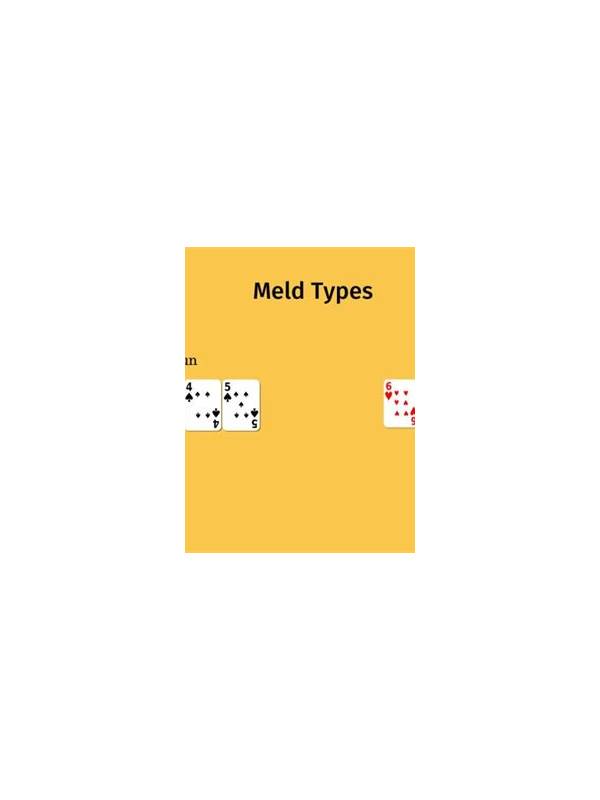
A flexible meld is one that helps your hand now without closing too many useful paths later. It may be a natural sequence that can accept an extension, a group that leaves neighboring cards available, or a structure whose cards can be rearranged without creating a new problem. Flexibility is about future options, not just present completeness.
The first test is extension. A sequence with an open end can often grow in more than one direction, while a tightly bounded sequence may already be finished. Neither is automatically better. The open structure is valuable when the next cards are reasonably available; the finished structure is valuable when certainty matters more than growth. Ask how many practical improvements remain.
The second test is independence. A meld is more flexible when it does not require a particular joker, a single missing rank, or a card that an opponent appears likely to hold. Natural cards usually preserve more honest information than a structure whose success depends on one narrow event. Dependencies are not forbidden, but they should be visible in your evaluation.
The third test is rearrangement. Some cards can move into another plausible group if the table changes. That does not mean you should constantly break melds. It means the hand has a backup route. A pair of the same rank may support a group while one card also belongs near a sequence; the best choice depends on the available completions and the cost of waiting.
Flexibility can shrink over time. A card that was useful early may become awkward after its neighboring cards are discarded. Recheck roles after major draws, especially when the discard pile removes one of your expected routes. A flexible meld is not a permanent label.
When comparing two arrangements, count the options each one leaves, then subtract the risks. Prefer the arrangement that supports a clear near-term action and retains at least one credible alternative. This approach avoids the common mistake of calling a complicated arrangement flexible simply because it contains many imagined possibilities.
You can also test flexibility by imagining one neutral draw. Which arrangement gives that card a role without a complete rebuild? The answer is not a prediction of the next card; it is a check on how brittle the current design is. A hand that can absorb several ordinary outcomes is usually easier to play than one that needs a special rescue.
Keep the test practical: name the card, its job, and the discard it would replace. If those details are missing, the option is probably only theoretical.
Related Post
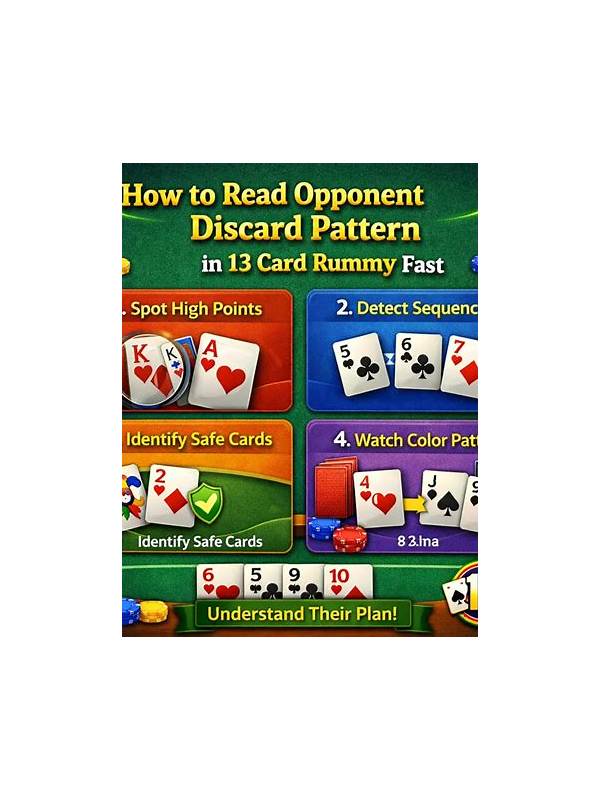
Rummy Opponent Signals: What a Discard Can and Cannot Show
Read an opponent’s discard as limited evidence while avoiding confident conclusions from one visible action. [...]
Rummy Fatigue Signals: Know When to End a Practice Session
Recognizing decision fatigue early can protect the quality of practice and support responsible play. [...]