Rummy Comparison: One Strong Anchor Versus Several Loose Anchors
An anchor is a card group that gives the rest of a rummy hand a stable reference. A strong anchor may already be complete or may need only one broadly useful card. Loose anchors are several partial groups that each look promising but still depend on future draws. Both approaches can be correct. The better choice depends on how much uncertainty the hand can afford.
One strong anchor offers certainty. Once its cards are confirmed, you can evaluate the rest of the hand without repeatedly reopening that part of the arrangement. This reduces mental noise and makes discards easier to compare. It can also protect against a common error: breaking a reliable group to chase a more exciting possibility. If the anchor is flexible and low-cost to maintain, it often deserves priority.
Several loose anchors offer reach. They let one future card improve more than one area, and they may adapt better when the discard pile changes. This approach is most useful when the fragments overlap in productive ways. A middle card that can extend either of two sequences, for example, may give the hand more than one route without requiring a large commitment.
The danger is confusing quantity with coverage. Three loose groups are not automatically better than one strong group. Count the specific cards each fragment needs, not just the number of ideas in your head. If all three plans require different low-probability cards, they may be three versions of the same fragile hope. If one incoming card can help two fragments, the structure is more resilient.
Compare the options using three costs. Certainty cost asks how much of the hand is still unverified. Repair cost asks how many changes are needed before a fragment becomes useful. Opportunity cost asks what you give up by keeping the cards involved. A strong anchor usually scores well on certainty, while loose anchors may score well on opportunity if they use the same valuable connectors.
The draw pile’s remaining size should change your preference. With many turns available, loose anchors can earn their chance because the hand has time to develop. With few turns left, a strong anchor plus a simple repair target is often safer. You do not need to eliminate every possibility; you need to stop spending attention on possibilities that cannot mature in time.
The practical rule is to preserve one reliable reference while allowing only a limited number of loose ideas around it. Reassess after each meaningful draw. If a loose anchor gains evidence, promote it. If it remains unchanged while consuming useful cards, release it. This keeps flexibility connected to action instead of letting a crowded hand become a collection of attractive but unrelated promises.
Related Post
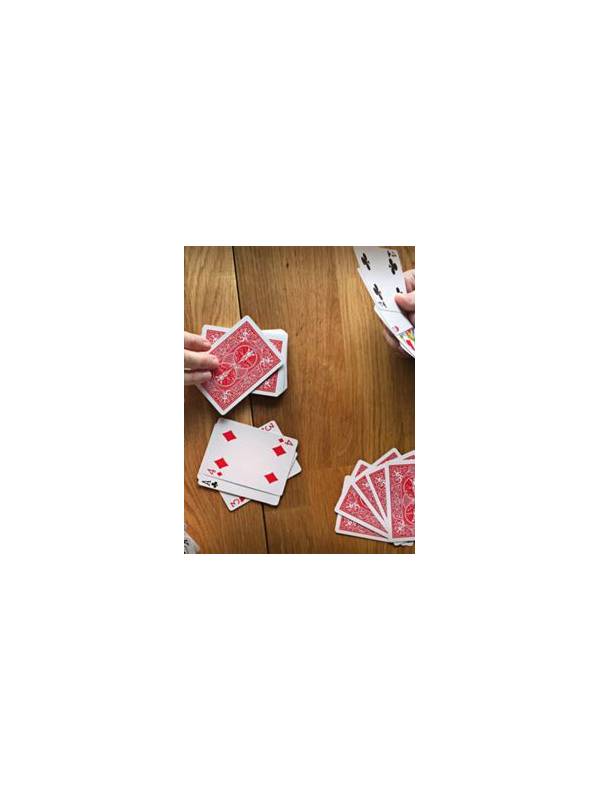
Rummy Tips: Compare Two Discards Before Choosing One
Comparing two plausible discards makes the trade-off between structure, points, and information easier to see. [...]
Rummy Comparison: Short Breaks Versus One Long Review
Short reviews after several rounds and one longer weekly review serve different learning needs. [...]