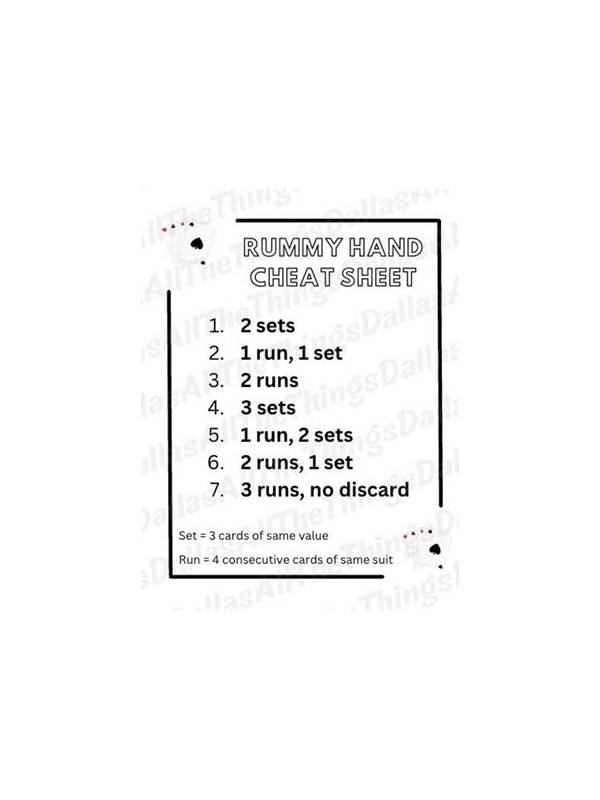
Rummy Strategy: Count Unfinished Groups Before Every Draw
Before drawing, count how many groups in your hand are still incomplete. This small habit exposes a common problem: trying to improve too many plans at once. If every pair, gap, and set feels important, the next card cannot guide you toward a coherent finish.
Begin by listing only groups with a credible path. A pair of neighboring cards may be one unfinished sequence. Three cards of different suits with the same rank may be one unfinished set. A single card with no partner is not yet a group, even if you can imagine several cards that would help it. The distinction keeps your count realistic.
Suppose your hand contains two sequence pairs, one set pair, and three isolated cards. You have three unfinished groups, not six projects. Compare them by need. One might require a card that can arrive in several forms; another might depend on one exact rank and suit. The narrow plan should have a deadline. If it remains unchanged after several turns, release it and protect a broader route.
A joker can alter the count, but do not let it make every arrangement appear possible. Assign the joker to the group that creates the greatest improvement while preserving natural structure. If moving it between two plans makes the hand look better each time, the plans may be competing for the same support card.
After the draw, count again. Did the number of unfinished groups fall? Did one group become narrower? Did an isolated card gain a useful connection? These questions turn a draw into information. A card that does not complete a group may still be valuable if it creates two reasonable continuations, while a card that completes a weak set may be less helpful than it looks.
Use the count as a guide, not a rigid formula. Rules, hand size, and scoring vary. The main benefit is attention: every draw should improve, consolidate, or replace a plan. When the count stops changing, that is a signal to simplify the hand rather than adding another hopeful group.
You can make the exercise more precise by writing the required card beside each unfinished group. If several cards would help, list the range rather than naming one favorite. This makes flexibility visible and reduces attachment to a particular draw. The goal is to keep the number of active plans small enough that each turn has a clear purpose.
Related Post
Rummy Comparison: Practice Against Bots or Friends?
Bots offer repeatable drills, while friends provide varied human choices; combining both can make practice [...]
Rummy Safety: Recognize When a Session Is Too Distracting
Recognizing distraction early helps players protect attention, privacy, and decision quality during online rummy. [...]