Rummy FAQ: Why Can a Safe-Looking Card Be Risky?
A safe-looking discard is not automatically safe. Low points, an unusual suit, or distance from your visible groups can make a card feel disposable, but those features reveal only part of its value. The card may complete an opponent’s sequence, combine with a hidden pair, or be the only flexible link in your own recovery plan.
Evaluate your card before evaluating the opponent. Ask whether it joins any realistic group, whether it is needed for a required sequence, and what alternatives you would have after releasing it. A card that does little for you can still be worth holding briefly if the remaining hand would otherwise depend on one exact draw.
Then inspect table information. Has someone taken nearby cards from the open area? Have they repeatedly avoided certain ranks? These clues can change the risk, but they are not proof. If the card would be valuable to many possible plans, assume it has some danger. If it is valuable only in a narrow and unsupported plan, the danger may be lower.
Timing matters as well. Early in a round, information is limited and preserving flexibility may be more important than avoiding every possible gift. Late in a round, reducing your own points or completing a legal structure may justify a riskier discard. The same card can therefore be safe in one turn and poor in another.
Use a simple comparison: personal cost, opponent benefit, and replacement options. Choose the card with the best overall balance, not the one that merely looks awkward. After the round, compare your prediction with what was revealed. This teaches you which visual signals were useful and which “safe” cards only felt safe because they did not fit your plan.
Safety is relative to the variant and the stage of play. A card may be harmless in a game with many copies but dangerous in a single-deck game, or acceptable early when you need flexibility but costly late when an opponent is close to declaring. Review the card in context rather than assigning permanent labels such as safe and unsafe.
When a card has both personal and opponent risk, compare them explicitly. A high personal cost can justify releasing a card even when an opponent may benefit, while a low personal cost may justify holding it for information. The best answer changes with the hand and the clock.
Related Post
Rummy Practice: Explain a Discard in Three Sentences
A three-sentence explanation drill reveals whether a rummy discard was based on structure, risk, and [...]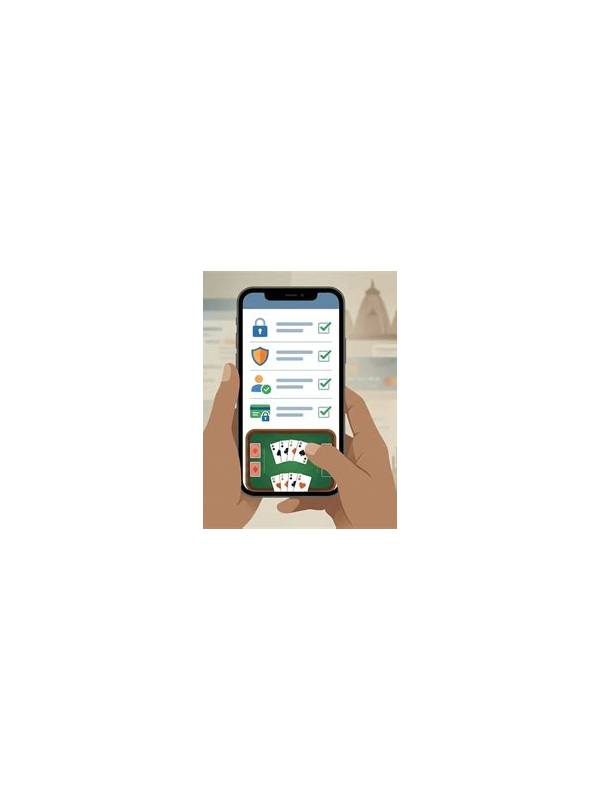
Rummy App Travel Checklist for Reliable Sessions
Device, network, and account checks can make a mobile rummy session more predictable while traveling. [...]