How to Explain Indian Rummy to a Friend in Ten Minutes
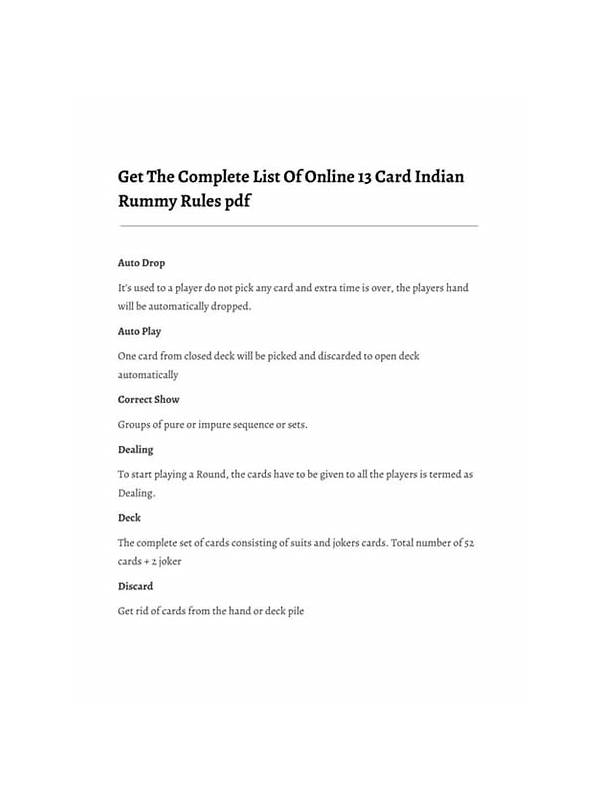
Teaching a card game is easier when the learner sees the goal before hearing every exception. Indian rummy can sound complicated because it combines sequences, sets, jokers, and a declaration. A ten-minute explanation should therefore build one idea at a time and leave unusual rule variations for later.
Start with the objective. Explain that a player arranges the cards in hand into valid groups, then declares when the required structure is complete. In a common thirteen-card version, that structure includes at least two sequences, with at least one pure sequence. A pure sequence is a run of consecutive cards in the same suit without a joker substituting for a card. Rules can vary, so the table’s help screen remains the final authority.
Next, show the two basic group types. A sequence uses consecutive ranks from one suit, such as 5, 6, and 7 of hearts. A set uses cards of the same rank in different suits, such as three queens. Point out that a group must contain the correct cards, not merely cards that look close together. Two queens do not make a set, and 5, 6, 8 is not a sequence.
Then describe a turn. The player draws one card from either the closed deck or the visible discard pile and discards one card. The hand changes by one card, so every draw should support a plan or improve flexibility. Demonstrate a simple example: keep 8 and 9 of clubs, draw a 10 of clubs, and discard an unrelated high card. Avoid teaching advanced probability during this first explanation.
Use a tiny practice hand. Ask the learner to find a pure sequence first, then identify a possible set, and finally name a card that appears least useful. Let them rearrange the cards physically or on screen. This turns vocabulary into an action and reveals misunderstandings quickly.
Finish with the declaration check. Before pressing declare, the player should verify every card belongs to a valid group, the pure-sequence requirement is met, and no card has been accidentally left alone. Mention that a declaration can fail when one group is invalid even if most of the hand looks organized. A calm final check is more valuable than speed.
Keep the first game low-pressure and agree on the exact format beforehand. Once the learner understands the draw, arrange, discard cycle, introduce scoring and strategy. Good teaching gives a new player a map first, then the detail needed for confident navigation.
Related Post
Rummy Safety: Make a Budget Before a Competitive Session
A pre-session budget can keep entertainment spending separate from impulse decisions during online play. [...]
Rummy Guide: Use a Last-Useful-Card Test
The last-useful-card test identifies whether a group still has a credible reason to remain in [...]