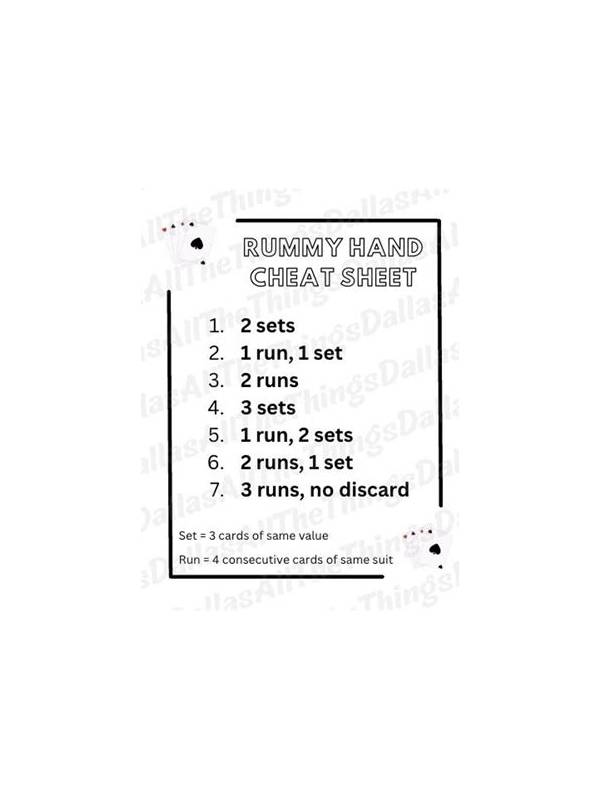
Rummy Comparison: Fixed Targets Versus Adaptive Targets

Some rummy players begin with a fixed target: build a pure sequence, complete a set, or preserve a particular group at all costs. Others use adaptive targets and change direction whenever new information appears. Neither style is always superior. The useful choice depends on how much structure the hand already contains and how quickly the table is changing.
A fixed target gives the hand a clear center. It reduces mental noise because every new card is judged against one defined objective. This can be helpful when the target is already well supported. If you hold connected cards and see related possibilities, a stable plan prevents needless rearrangement. It can also make decisions faster under a short timer.
The risk is commitment. A fixed target can turn into a sunk-cost trap when several draws fail to help. Players may keep expensive cards because they have already invested attention in the route. A target should be reviewed when its remaining requirements become narrow, costly, or incompatible with the rest of the hand.
An adaptive target keeps several routes open. You may decide to pursue a sequence, a set, or a defensive discard based on the next useful piece of information. This style protects flexibility and handles uncertain hands well. It is especially useful early, when there is time to observe and when no route has a clear advantage.
Its danger is endless reconsideration. If every new card causes a complete redesign, the hand becomes reactive. Adaptive planning needs boundaries. Keep one primary route, one backup route, and a clear condition for abandoning each. That structure preserves flexibility without turning every draw into a fresh debate.
A simple comparison is to rate each target on support, cost, and deadline. Support measures how many cards already belong. Cost measures the number of specific missing pieces and the awkward cards you must retain. Deadline reflects turns, score pressure, or visible opponent progress. A fixed target is attractive when support is high and cost is modest. An adaptive approach is safer when support is low and the deadline is distant.
Review the target after meaningful events, not after every ordinary draw. A new public discard, a completed group, or a sharply reduced number of turns can justify a change. Planning is successful when it makes the next choice clearer, not when it predicts the entire hand.
Related Post
Rummy Comparison: Exact Draws Versus Broad Draws
Compare narrow and broad drawing plans by useful cards, deadlines, and penalty exposure. [...]
Rummy Sequence Building with Two Flexible Connectors
Learning how to compare two-card connectors can make sequence building more flexible in a thirteen-card [...]