Rummy How-To: Review a Hand From the Opponent’s View
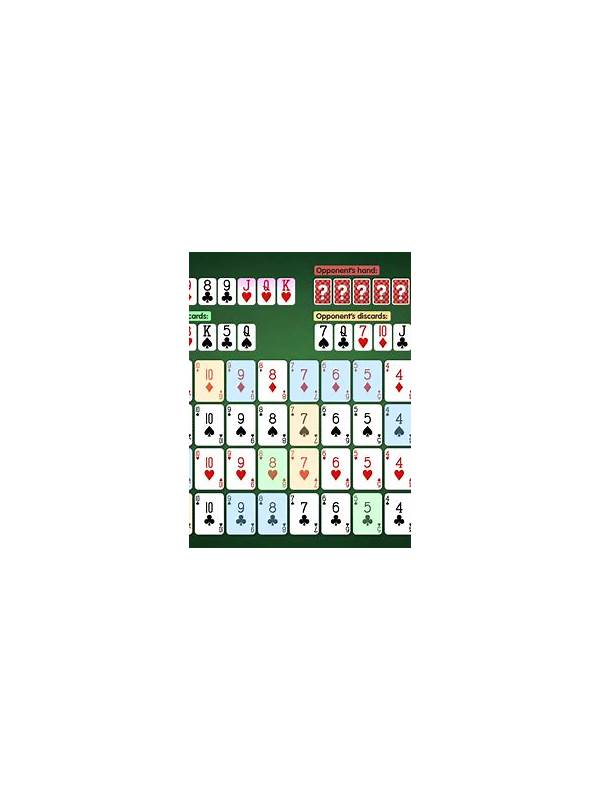
An opponent’s view of your hand is limited, but your draws and discards can still provide clues. Reviewing that visible information can make decisions more deliberate. The goal is not to hide every signal or predict another player perfectly; it is to notice avoidable information while managing your own hand first.
Start with the card you are considering discarding. Ask what a reasonable observer could infer from it. A card that connects closely to cards already shown in the discard pile may look more intentional than an isolated card. This does not mean the connected card must be kept. It means the visible consequence belongs in the comparison.
Next, examine your draw source. Taking a visible discard can reveal that the card has immediate value to you, although the exact plan remains unknown. Drawing from the closed pile reveals less about the specific card but may still suggest that you are searching. Neither choice should be made only for concealment. A sound hand decision has priority over theatrical uncertainty.
Avoid assuming that an opponent reads the table the same way you do. They may be focused on their own cards, using a different strategy, or following information you cannot see. Treat perceived signals as possibilities rather than facts. This protects you from spending several turns reacting to an imagined plan.
The review is most useful when it identifies a direct risk. If a discard completes an obvious sequence for an opponent and you have a reasonable alternative, compare them. If preventing that possibility would force you to retain a costly or disconnected card, the defensive choice may be worse. There is no need to block every theoretical improvement.
Practice by replaying a hand and listing only visible events: draw source, discarded card, and timing. Then write two or three possible interpretations without selecting one as certain. This exercise improves awareness while preserving humility about hidden information.
Use the same discipline toward your own assumptions. A player who takes one card may later discard a different one for many reasons. Observing the table is useful when it adds context to your hand review. It becomes harmful when it replaces evidence with a story.
The opponent’s view is one factor in a decision, not the center of the game. Protect your structure, reduce avoidable risk, and use visible information carefully.
Afterward, ask whether the visible-information review changed a decision for a concrete reason. If it only created anxiety, simplify the process and return focus to the cards you can actually evaluate.
Related Post
Rummy Practice: Compare Sequence Edges and Middle Ranks
Practice seeing sequence possibilities by mapping neighboring ranks without relying on a live table. [...]
Rummy Tips: Give Every Flexible Card an Expiration Point
Flexible cards are valuable, but keeping them forever can prevent a hand from becoming clear [...]