Rummy FAQ: Can a Joker Rescue Any Group?
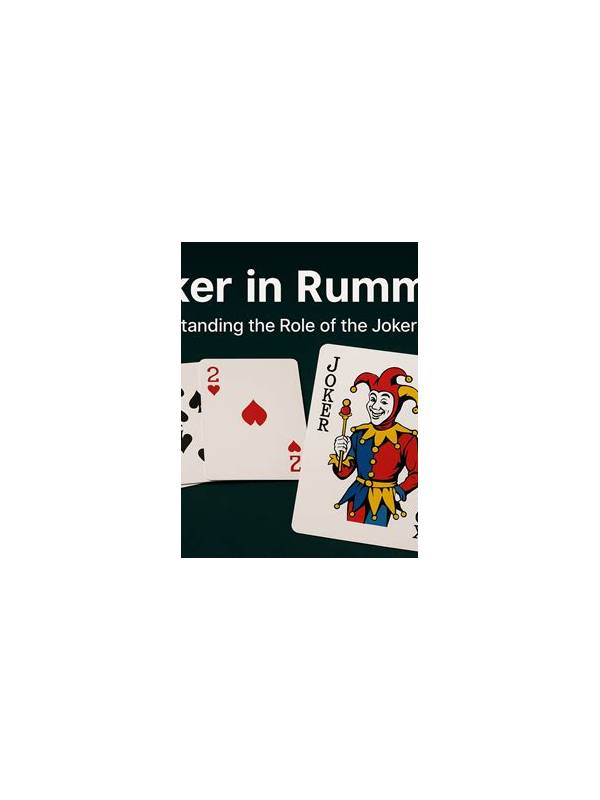
A joker can be valuable in rummy because it may stand in for a missing card, but its power is defined by the format’s rules. It does not automatically turn any collection into a valid group. Before relying on one, confirm how the game treats jokers in sequences, sets, pure sequences, and final declarations.
The first limitation is structural. Many rummy formats require at least one sequence without a joker, and a joker cannot satisfy that requirement by itself. A group containing a joker may look complete while the overall hand remains invalid because the necessary natural structure is missing. Treat the joker as support, not as a universal substitute for understanding the rules.
The second limitation is role. In a sequence, the joker normally represents a particular missing rank and suit position. In a set, it may complete a group of equal ranks, subject to the format’s restrictions. If the same joker could fit several roles, choose the role that protects the most important requirement and leaves the other cards easiest to organize.
A common mistake is to preserve a joker for a spectacular future combination while ignoring an immediate, reliable use. That may be correct when the hand already contains a valid foundation. It is risky when several groups are incomplete and one natural sequence is still required. Ask which assignment reduces the greatest uncertainty, rather than which assignment looks most impressive.
Jokers also affect discard decisions. An unneeded joker can carry a high penalty in some scoring systems, but discarding it may remove an important safety net. The right choice depends on the current hand, the chance of building natural groups, and the cost of holding it. Never discard or keep one solely because a general tip says jokers are always valuable.
Before confirming a declaration, inspect every joker assignment as if you had to explain it. Identify the natural cards, the substituted card, and the rule that permits the arrangement. If any part is uncertain, pause and consult the stated rules. A joker can rescue a well-supported plan; it cannot rescue a plan that never met the format’s basic conditions.
It is also useful to distinguish a printed joker from a wild joker if the format uses both. Their treatment may differ, and an arrangement that is legal with one may be restricted with the other. Keep the two roles separate while sorting the hand. When in doubt, use the official rules shown inside the game or supplied by the organizer, because table habits and advice from a different platform may not apply to the current game.
Related Post
Rummy Comparison: Rule Familiarity Versus Pattern Familiarity
Knowing the rules and recognizing card patterns are different skills that should be practiced separately. [...]
Rummy Comparison: Two-Player Rhythm Versus Four-Player Rhythm
Player count changes how quickly information arrives and how cautiously a rummy plan should evolve. [...]