Rummy Rule Translation: Build a Personal Reference Card
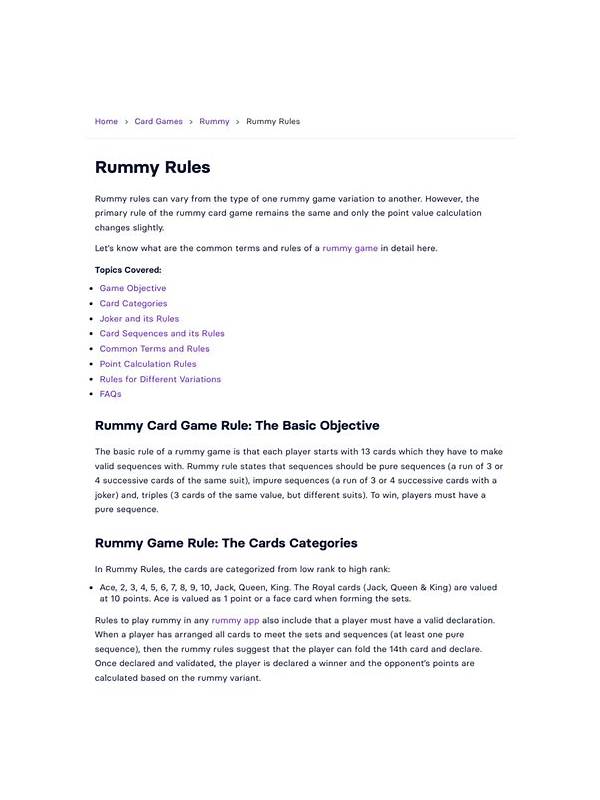
Rules are easiest to use when they are available at the moment a question arises. A personal reference card can help a player compare a platform’s wording with familiar rummy concepts, but it should summarize rather than replace the official rules.
Read the full rules once before making notes. Mark only decisions that can change an action: hand size, draw order, legal group definitions, joker treatment, scoring, declaration conditions, timer behavior, and what happens after a disconnect. Avoid copying promotional language or general claims about fairness into the card. The reference should answer “what do I do?” rather than “why should I join?”
Use a two-column format. Put the platform’s exact term on the left and your plain-language interpretation on the right. Add a question mark beside anything uncertain. For example, if the page uses “wild card” but does not say whether a natural substitute is required, leave that point open until you confirm it. An honest blank is safer than a confident invention.
Test the card against a practice hand. Can you identify which pile to draw from, what counts as a group, and when a declaration can be submitted? If the answer depends on a condition missing from your notes, return to the official page. Keep version information at the bottom, including the date you checked it, because rules and interface labels can change.
Do not share a reference card that contains account numbers, screenshots with balances, or private support conversations. If you play with friends, distribute a clean copy containing only the agreed rules. Ask everyone to accept changes before a new round begins.
Review the card whenever you switch variants or platforms. A short reference is useful precisely because it is specific. Keeping separate cards for separate rule sets prevents details from blending together and makes every decision easier to explain.
Use the reference card as a prompt for verification, not as permission to fill gaps with assumptions. If a friend offers a different interpretation, compare both notes with the current source. Mark the result as confirmed, revised, or unresolved. This small status label keeps uncertainty visible and makes your notes more reliable over time. Keep the card short enough to scan during a break. Use headings such as Setup, Legal Groups, Scoring, and Exit Conditions. Do not turn it into a second strategy guide that encourages reading while the timer runs. Its job is to restore accurate facts, after which your normal decision process can begin.
Related Post

Rummy Turn Checklist: Draw, Recheck, Discard
A three-stage turn routine keeps rummy decisions consistent when the table moves quickly. [...]
Rummy Guide: Read the Table Without Overinterpreting It
A measured way to use table information while keeping your decisions grounded in your own [...]