Rummy FAQ: Why Do Similar Hands Need Different Discards?
Similar-looking hands do not always have the same best discard. A pair of connected cards may be valuable in one position and awkward in another. The difference comes from context: what the hand already contains, which requirements remain, how late the game is, and what public cards suggest.
First compare the surrounding cards. A seven and eight of one suit are stronger when a nine or six remains realistically available and the rest of the hand can support the eventual sequence. The same pair is weaker when it competes with a more complete group or leaves several high cards stranded. Card value comes from relationships, not rank alone.
Timing also changes the answer. Early in a hand, keeping a flexible pair can be reasonable because many draws remain. Later, the same pair may be too slow if it needs a precise card. At that point, reducing points or protecting a nearly complete valid group may deserve priority.
Requirements create another difference. If one hand already has the natural sequence required by the format, it can consider sets or secondary improvements. If another hand lacks that sequence, the same set opportunity may need to be released so the requirement can be addressed. Always confirm the table’s rules because formats use different declaration conditions.
Public information matters, but it should be used carefully. A needed card already visible in the discard pile may reduce the attractiveness of a plan. It does not make the plan impossible unless the rules and complete card information justify that conclusion. Use visible cards to adjust confidence rather than to create certainty.
Finally, compare the discard’s effect on the whole hand. Keeping one attractive group may force you to hold three unrelated cards. Releasing that group may seem wasteful but could create a cleaner structure. Ask which choice leaves more useful draws and fewer expensive leftovers after the next turn.
The right question is not “Which card is usually better?” It is “Which card supports this hand, at this moment, under these rules?” That question explains why two similar positions can produce different actions. Context is not inconsistency; it is the information that makes a discard meaningful.
This is also why copying a move from a short video or a previous hand can be misleading. The visible cards may look similar while the hidden requirements and timing are different. Borrow questions and methods, then apply them to the position in front of you.
Related Post
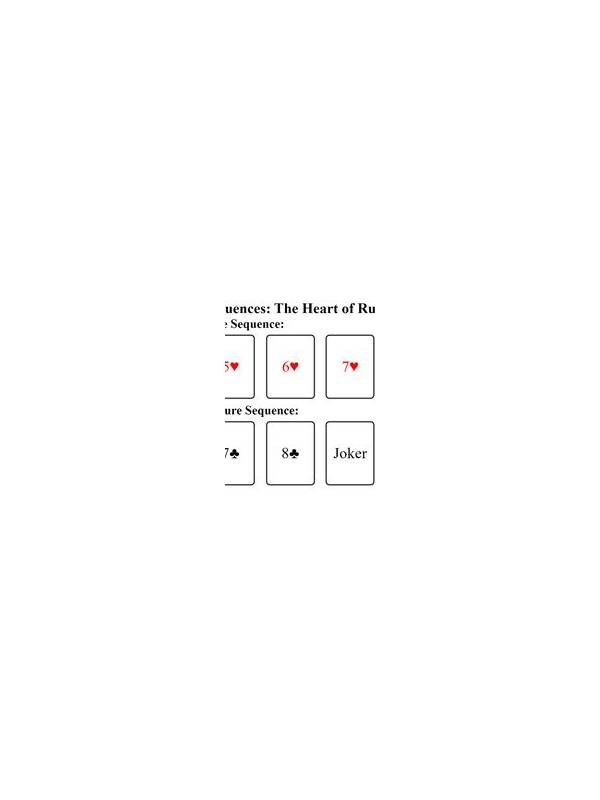
Rummy FAQ: Can a Sequence Be Valuable Before It Is Complete?
An unfinished sequence can be useful, but its value depends on its connections, cost, and [...]
Rummy Discard Pile Observation Without Overreading Opponents
Read the discard pile for useful clues while avoiding assumptions about another player’s complete hand. [...]