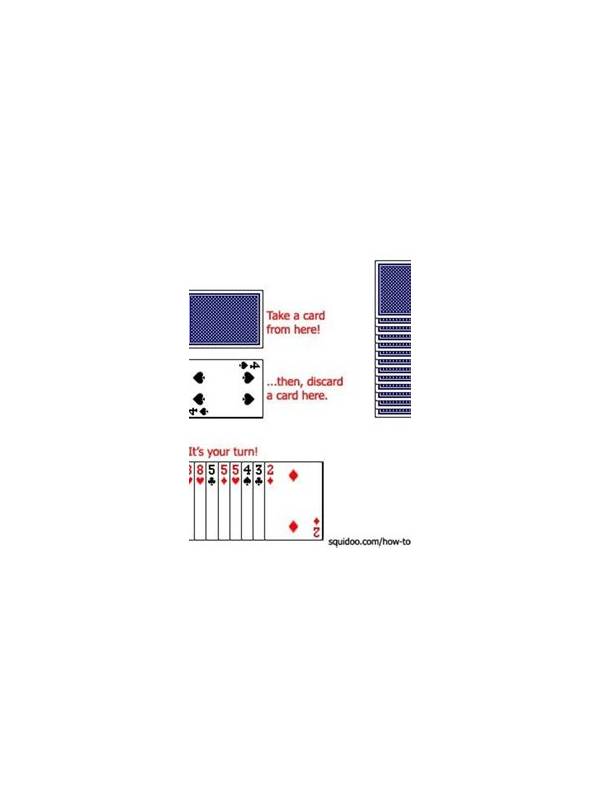
Rummy Tips: Use a Card-Role Label Before Discarding
Discard decisions become easier when every card has a role rather than an emotional label such as “lucky” or “interesting.” A temporary role describes what the card is doing in your current hand. The role can change after a draw, so it should never become a permanent rule.
Use four useful labels: anchor, connector, candidate, and burden. An anchor is part of a completed or nearly completed structure that you expect to keep. A connector can support more than one route, such as a middle card that links neighboring ranks. A candidate is a card with a plausible but unconfirmed use. A burden is a card that has little connection to your legal grouping plan and carries a costly point value.
Begin with the obvious labels. A card inside a valid pure sequence is an anchor. A high card with no neighboring rank or matching suit may be a burden. The difficult cards are candidates and connectors. For each one, ask whether it participates in one route or several. A connector with two realistic uses should usually survive longer than a candidate that depends on one exact draw.
Labels should include a confidence level. “Connector, strong” means the card supports several active plans. “Candidate, weak” means the card is being kept mainly because it might become useful. This distinction prevents a speculative pair from receiving the same protection as a proven sequence.
When the hand changes, relabel rather than defend the old label. If a drawn card completes one group, some former connectors may become burdens. If an opponent repeatedly takes cards from a visible pile, the information may affect your estimate of a route, but it should not automatically turn a weak candidate into an anchor. Keep evidence and hope separate.
For a quick discard check, inspect the proposed card in this order. Does discarding it break a required sequence? Does it remove the only connector between two useful cards? Does it carry high penalty points with no clear role? Could it be safely replaced by a card already available from another route? The answers create a practical priority without requiring perfect prediction.
This method also helps during fast games. You can mentally say “weak candidate” or “high-point burden” and move on. After the hand, review whether your labels matched the result. The purpose is not to make every decision correct; it is to make your reasoning visible enough to improve.
Related Post
Rummy Comparison: Building Cards Versus Waiting Cards
Distinguishing active from passive draws shows whether a card is building a route or merely [...]
Rummy Comparison: One Strong Plan Versus Two Small Plans
Choosing between one developed plan and two smaller plans depends on flexibility, timing, and the [...]