Rummy Guide: Use a Route Ladder for Difficult Hands

An awkward rummy hand often feels difficult because every card seems to belong to a different idea. The usual reaction is to choose one promising group and protect it too long. A route ladder offers a calmer alternative: list the best possible completion routes in order, then keep enough flexibility to move between them.
Start by separating cards that already form a valid group from cards that are merely related. A completed pure sequence deserves a different level of protection from a pair with two possible extensions. Mark each unfinished group with the missing cards it needs. For example, a seven and nine of one suit might need an eight, while a pair of queens may need another queen or a suitable surrounding sequence. This simple notation turns a vague hand into visible options.
Next, rank the routes by three questions. How many cards are missing? How many different cards could complete the route? Can the route coexist with your required pure sequence? A route needing one widely available card is usually stronger than one needing two exact cards. However, a route that creates a legal declaration may be more valuable than a route that merely lowers points.
Keep a primary, secondary, and emergency route. The primary route is the most efficient arrangement. The secondary route uses overlapping cards differently. The emergency route is a practical way to reduce penalty points if the first two fail. Do not treat the ladder as a promise. After every draw, update it because a new card can change which route is realistic.
The ladder is particularly useful when a joker is involved. Instead of spending the joker immediately, ask which route benefits most from its flexibility. A joker that completes an otherwise impossible group may be worth more than one that saves a single high-value card. The answer depends on the rest of the hand, not just the card being replaced.
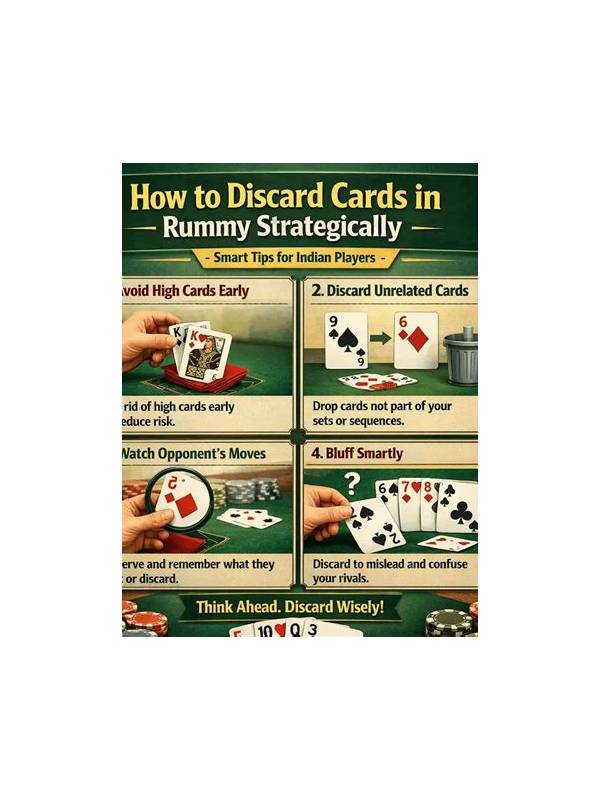
Before discarding, compare the proposed discard with all three routes. If it destroys the primary route but leaves the secondary route intact, the decision may still be sound when the primary route needs an unlikely card. This habit reduces emotional attachment to attractive but fragile patterns.
Practice by pausing after the opening deal and writing three routes in a few words. The goal is not to calculate every future draw. It is to keep your decision space visible, so one disappointing card does not dictate the whole hand.
Related Post

Rummy Comparison: One Strong Plan or Two Smaller Plans
Keeping one strong plan or two smaller plans depends on route quality, requirements, and the [...]
Rummy App Accessibility: Make Text and Contrast Easier to Read
Adjusting text, contrast, and touch settings can make a digital rummy table clearer and less [...]