How to Compare Rummy Cards by Future Use
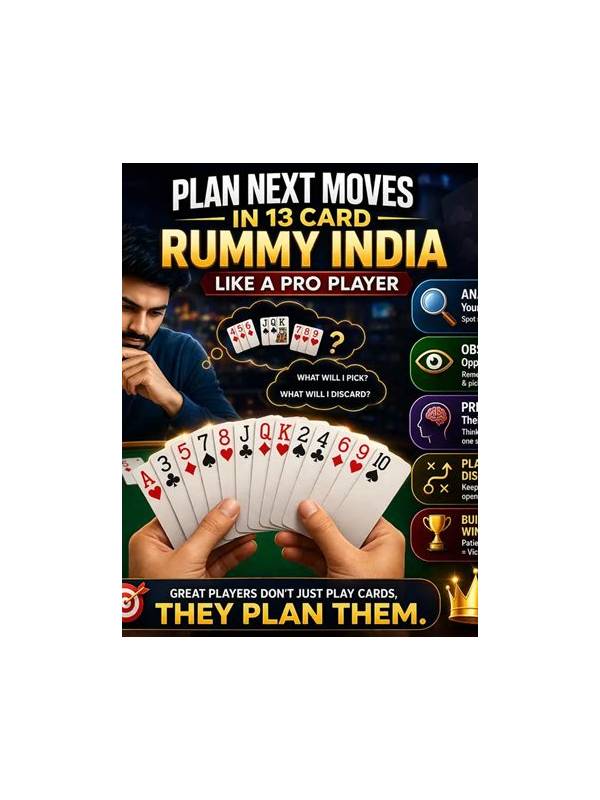
Card points matter in rummy, especially when an unfinished hand could leave a penalty. Yet points alone do not tell you which card to discard. A low-point card may be isolated, while a high-point card may be one step from a valuable pure sequence. Comparing cards by future use gives a more balanced decision method.
For each candidate, list its realistic roles. A card may connect to neighbors in the same suit, join a rank-based set, or support a joker-assisted group. Count practical options rather than imaginary ones. A five that needs a two-card gap is not as flexible as a five that can join either a four or six in its suit. A duplicate rank may also be useful in a set, but only if other suits are still available.
Then consider information. If you have already seen relevant cards discarded, one candidate may be less likely to improve than it appeared. Visible evidence should adjust your judgment, not create certainty. A card that has multiple open connections generally deserves more time than one whose only partner is known to be unavailable.
Finally, compare the cost of holding each card. High cards can carry more penalty points, and isolated high cards are often reasonable discards. However, do not discard a needed structural card merely because its number is large. Ask which choice leaves the rest of the hand easiest to complete. A useful discard reduces both immediate risk and future confusion.
Use a quick three-part tie-breaker: first, protect cards already inside a valid or nearly valid group; second, keep cards with several low-gap connections; third, release the card with the highest cost and fewest roles. Recheck after every draw because the value of a card is situational. This method cannot predict the next card, but it turns a vague choice into a repeatable review and helps players stay deliberate under a timer.
The comparison can be spoken silently in three words: structure, options, cost. Structure asks whether the card belongs to a group; options asks how many realistic improvements remain; cost asks what happens if it stays. Repeating those words prevents a single number or attractive pattern from dominating the decision. The method is also useful when both candidates have similar points. Prefer the card that keeps more than one credible arrangement, unless retaining it forces you to hold several other weak cards. A card’s future use is a property of the whole hand, not a permanent label attached to its rank. Recalculate after a draw, and accept that a sound decision can still lead to an unfavorable result because the required card may not appear.
Related Post
Rummy Tips: Use Color Contrast for Mobile Card Recognition
Better visual contrast can make card names, suits, and action controls easier to check on [...]
How to Prepare Questions for Rummy App Support
Clear support questions help resolve account, payment, or game-history issues with less back-and-forth. [...]