How to Use the Rummy Discard Pile as a Question
The discard pile contains information, but it is easy to read too much into it. A better approach is to turn each visible card into a question about your own plan. This keeps observation useful without encouraging confident guesses about hidden hands.
Begin with the newest discard. Ask whether taking it would improve a valid group immediately or only create another uncertain possibility. If it completes a sequence or set and does not damage your structure, it deserves attention. If it merely looks attractive because it is a middle card, compare it with a closed-pile draw and the discard you would need to release.
Next, look at repeated suits and ranks in the pile. Several cards from one suit may suggest that a particular connection is less available, but it does not prove that the card you want is impossible. Treat the observation as a reason to lower confidence, not as a guarantee. Players can hold cards you cannot see, and the pile may reflect many different plans.
Then ask what your own discards have communicated. If you have released several cards of one suit, continuing to hold a related isolated card may deserve review. This is not about hiding a perfect strategy; it is about noticing whether your hand has changed and whether your current plan still makes sense.
Before picking from the open pile, apply a three-part check: validity, improvement, and consequence. Validity asks whether the resulting group follows the variant rules. Improvement asks whether the draw helps more than one plausible alternative. Consequence asks which card becomes your discard and whether the change leaves a coherent hand.
If the answer is unclear, the closed pile may be the simpler choice. Uncertainty is not failure; it is information about the quality of the option. Record the question in practice: “I took this card because it completed a group,” or “I passed because it required too many assumptions.” Reviewing those reasons builds disciplined observation.
The discard pile is most useful as a mirror for your choices. It can refine priorities and expose contradictions, but it cannot reveal everything. Use it to ask better questions, keep your confidence proportional to evidence, and protect your own hand’s structure.
Related Post
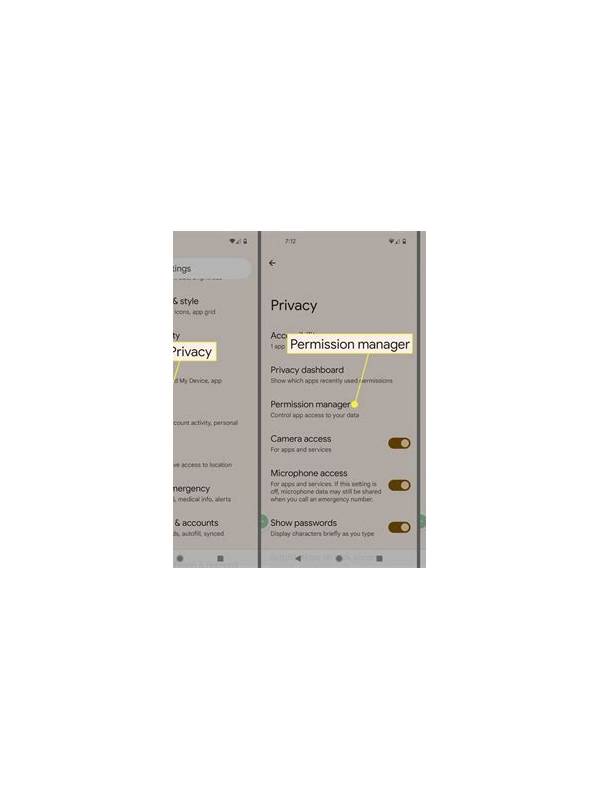
Rummy App Permission Review: What Access Should Be Necessary
Rummy App Permission Review: What Access Should Be Necessary offers practical guidance for clearer, safer, [...]
Rummy How-To: Compare Hand Plans at Midpoint
A midpoint plan comparison reveals whether your current route is still better than a clean [...]