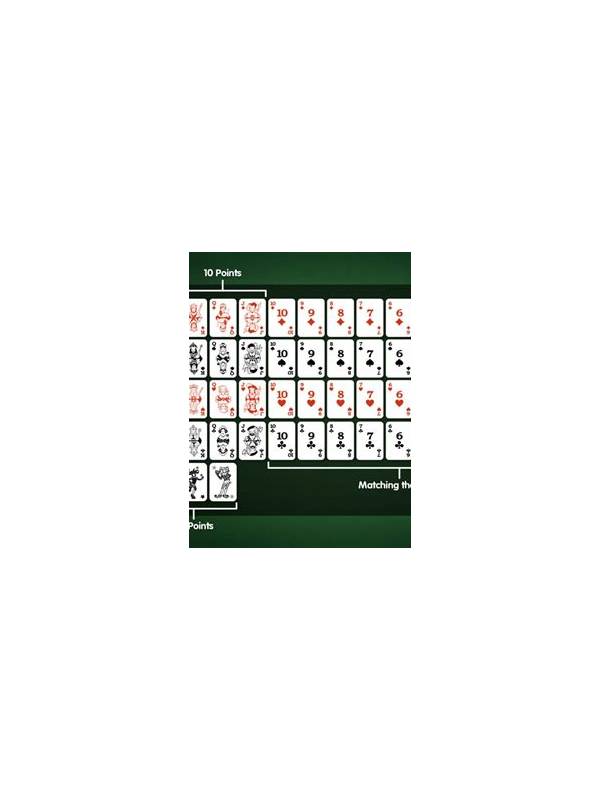
Middle Cards and Their Hidden Rummy Flexibility
Middle cards often deserve a second look because they can connect with ranks on both sides. A six, seven, or eight may participate in several possible sequences, while an ace or king usually has fewer neighboring options under common rules. This does not make every middle card valuable, but it gives you a useful way to assess an unfinished hand.
Begin by listing direct neighbors. For a seven, the six and eight of the same suit are immediate links. If you hold a six and seven together, the eight is one possibility; if you hold a seven and nine, the eight is also useful. The card’s value rises when it supports more than one realistic completion. “Realistic” matters: a theoretical connection is less important if the needed cards are unlikely to appear or would damage another group.
Next, check whether the middle card creates a pure-sequence opportunity. A pure sequence normally has priority because many Indian rummy variants require one before a valid declaration. A middle card that anchors such a sequence can be more important than a high card that merely reduces points. Confirm the rules of the table before relying on this priority.
Do not keep a middle card forever. Ask three questions after each draw: did its number of useful links increase, stay the same, or fall? Is it part of a group with matching ranks? Does retaining it prevent you from reducing an exposed high-point risk? If its connections remain hypothetical for several turns, set a deadline for changing direction.
Sorting helps. Place cards by suit and rank, then mark firm groups, one-card extensions, and isolated cards. This reveals when a six is genuinely flexible and when it is just an isolated card with attractive neighbors in theory. It also prevents visual clutter from making a weak pair look stronger than it is.
Middle-card judgment is therefore comparative. Choose the card that supports the clearest plan with the fewest missing pieces, while keeping your point exposure manageable. Practice with random hands and explain aloud why a middle card stays or goes. The goal is not to memorize a fixed ranking, but to see how structure changes the value of the same card from one hand to another. Middle-card judgment is therefore comparative. Choose the card that supports the clearest plan with the fewest missing pieces, while keeping your point exposure manageable. Practice with random hands and explain aloud why a middle card stays or goes. The goal is not to memorize a fixed ranking, but to see how structure changes the value of the same card from one hand to another.
Remember that flexibility has an opportunity cost. Keeping several middle cards may leave too many unfinished groups and too few cards that can be safely released. Reassess after every meaningful draw, and be willing to convert a flexible card into a discard when it no longer supports the strongest arrangement. The best use of a middle card is the one that helps the whole hand, not the one that looks most active in isolation.
Related Post

Rummy FAQ: What Should You Do With a Nearly Useful Card?
A card that is close to useful deserves a measured deadline, not an automatic keep. [...]
Rummy Guide: Read a Hand by Its Weakest Group
Finding the least stable group in your hand can clarify what to protect, improve, or [...]