Rummy Comparison: Holding Middle Cards Versus Keeping Low Cards
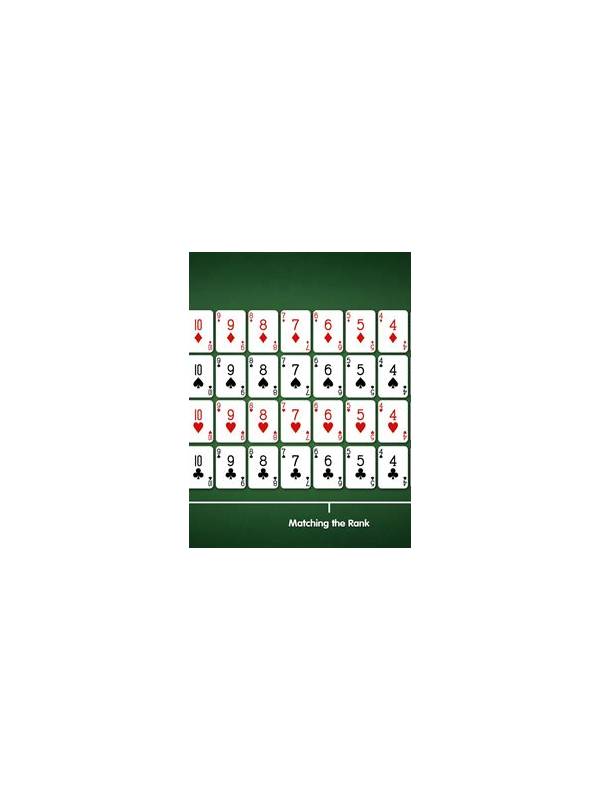
Players often ask whether middle cards are automatically better than low cards in rummy. Neither group is universally superior. Middle cards can connect on both sides, while low cards may be safer to hold as points and can complete sequences near an edge. Context determines the better choice.
Consider flexibility first. A 6 can potentially join 4-5 or 7-8 in its suit, giving it more neighboring roles than a 2, which has fewer lower-side possibilities. This makes supported middle cards useful when the hand contains several connected ranks. But an unsupported 6 is still a singleton, and its flexibility is theoretical until another card creates a route.
Low cards have a scoring advantage in many rummy systems because they carry fewer points when left unmatched. That advantage can matter during a defensive turn or when the hand is unlikely to finish soon. A low singleton may therefore be the better temporary hold if it costs little and could join a visible sequence later.
Compare pairs rather than rank categories. A 2 and 3 of the same suit may be a stronger asset than a lone 7. A 7 next to an 8 may be stronger than an isolated ace. Look for existing support, missing-card breadth, and whether the card contributes to a required pure sequence. Rank should break close ties, not make the decision by itself.
Late in a hand, the comparison changes again. If an opponent seems close, high unsupported cards deserve urgent attention. If your own route is one middle card away and the draw is broad, preserving that route may be worth carrying a little extra value. Make the choice explicit: flexibility for completion, or low exposure for protection.
The practical rule is to hold a card for a reason you can state. “It is a middle card” is incomplete. “It joins two supported same-suit paths and keeps the required sequence possible” is a stronger reason. That distinction leads to cleaner discards and fewer automatic habits. In practice, compare connectedness using a small priority order: a card in a valid group first, a card in a broad same-suit route next, a card that lowers penalty after that, and an isolated expensive card last. This is only a starting framework. A required pure sequence can move a lower-ranked card to the top, while opponent pressure can make a high singleton urgent. Revisiting the order after every meaningful draw is more important than memorizing a universal ranking.
Related Post

Rummy Tips: Compare Cards by Flexibility and Penalty
Learn how to balance a card’s possible future uses against the cost of keeping it [...]
Rummy FAQ: What Is a Clean Reset After a Bad Draw?
A clean reset means evaluating the current hand again instead of protecting a plan that [...]