Rummy Comparison: Deliberate Discards Versus Impulse Discards
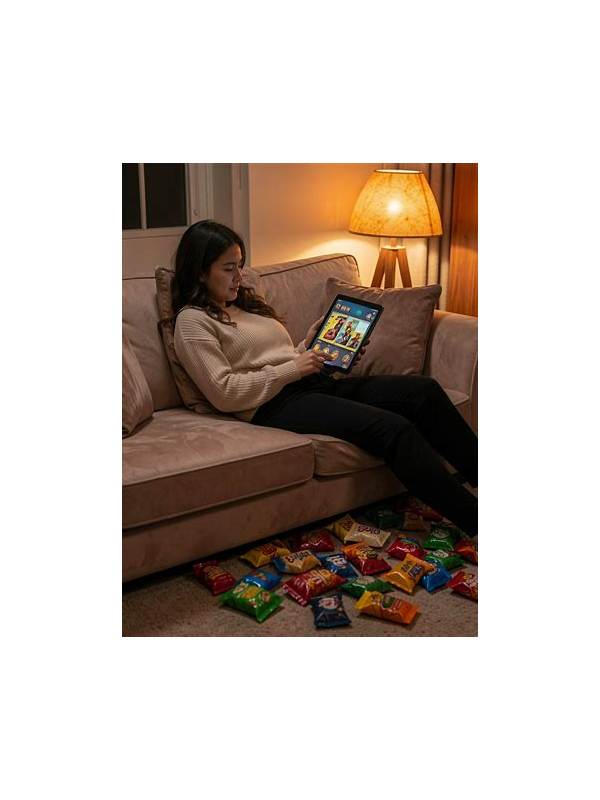
Every rummy player discards cards, but the reason behind the discard can differ. A planned discard follows a hand-building rule chosen before the pressure of the turn. A reactive discard is selected because the last draw feels disappointing, a timer is running down, or an opponent just took a card. Neither label determines whether the card is good or bad, but the distinction helps with review.
A planned discard begins with a question such as, “Which card has the fewest credible jobs?” You inspect the hand, compare potential groups, and release the card that creates the least damage. The decision can still be wrong, because future cards are uncertain. Its advantage is that you can explain the trade-off and test the rule later.
A reactive discard often begins with an emotion or a single event. You may throw away the card you just drew because it does not fit immediately, even though it connects to two possible sequences. Or you may keep a high card because it looks useful after an opponent discards a related card. The reaction is understandable, but it gives one moment too much influence.
To compare the two approaches, review three points. First, what information was available before the discard? Second, what alternatives were considered? Third, did the chosen card have a recovery route if the plan failed? A planned choice should have answers, even if the answers are brief. A reactive choice often has only a feeling: “it seemed right.”
This comparison does not mean every turn needs a long calculation. A fast planned rule can be simple: remove an isolated high card unless it has two realistic connections; otherwise remove the least flexible duplicate. The rule is a starting filter, not a command. Override it when the current hand provides clear evidence.
In practice, make a one-line note after a difficult turn. Write “released because…” and complete the sentence with a structural reason. If you cannot complete it, label the discard reactive and examine it later. Over several sessions, the notes reveal patterns: perhaps you react to missed draws, protect pairs too long, or rush when a timer appears. That information is more valuable than judging one result. The goal is not to eliminate uncertainty, but to make decisions deliberate enough to learn from.
One practical way to slow a reaction without slowing the whole game is to name two candidates before choosing. Compare their current point cost, number of credible connections, and likely information value. If the timer is short, make the comparison in that order and stop after the first clear difference. Deliberate play is not measured by how long you think; it is measured by whether the choice follows a repeatable question rather than the strongest feeling produced by the last card.
Related Post
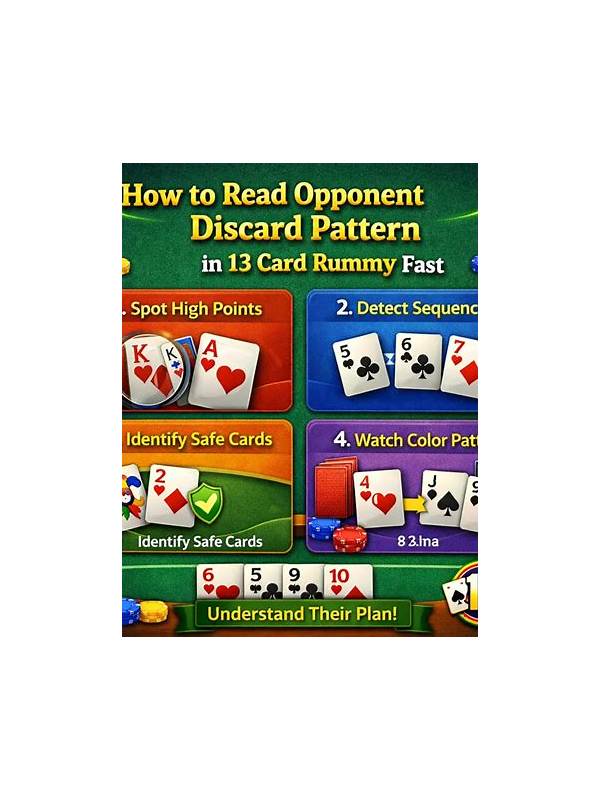
Rummy Opponent Signals: What a Discard Can and Cannot Show
Read an opponent’s discard as limited evidence while avoiding confident conclusions from one visible action. [...]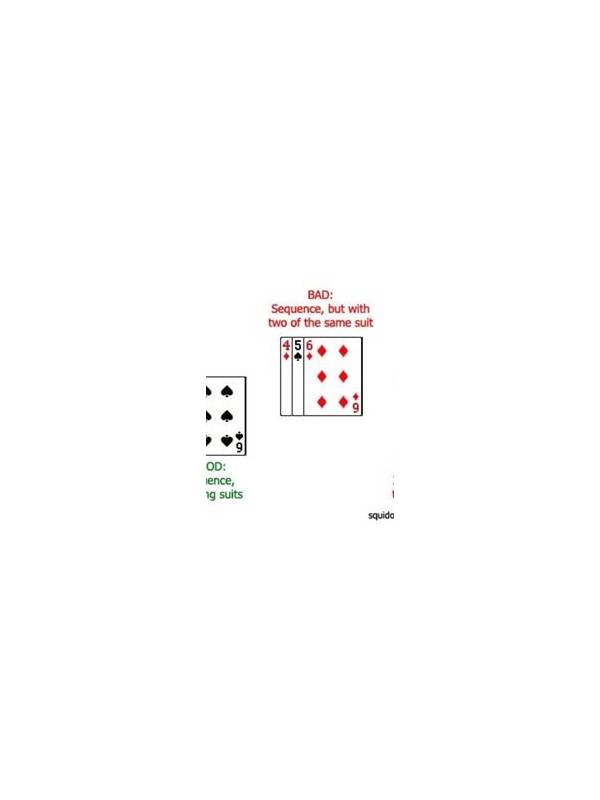
Rummy Suit Balance: A Simple Way to Judge Your Opening Hand
Learn how suit distribution can reveal strengths and risks before your first draw. [...]