Rummy Discard Timing: Release a Card at the Right Moment
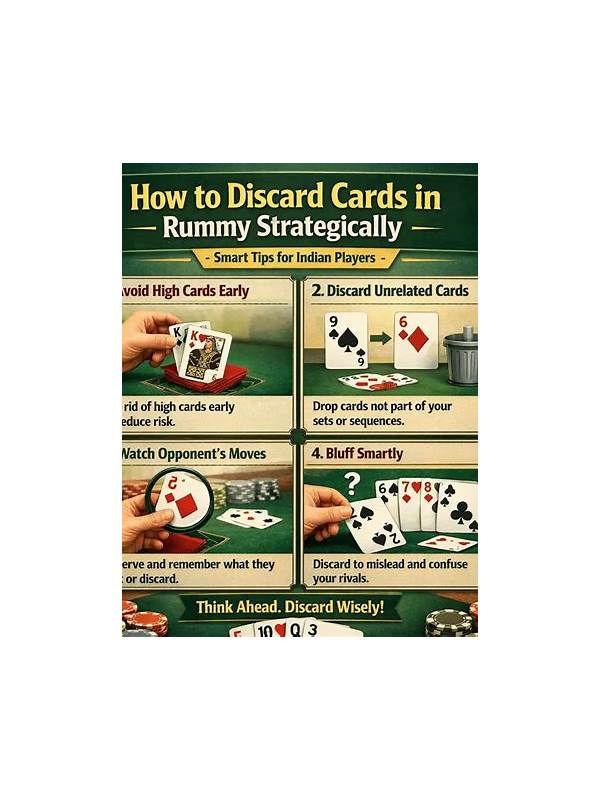
A discard can be correct in one turn and questionable in the next. The draw pile changes, visible discards provide new evidence, and an unfinished group may lose its best connection. Discard timing is therefore a repeated review rather than a one-time ranking of cards.
At the start of a turn, compare the card just drawn with the cards already held. If it creates a completed group, preserve it unless another arrangement is clearly stronger under the active rules. If it creates only a distant possibility, measure the gap and the number of realistic ways to improve. Newness is not evidence of usefulness.
Before releasing a card, check the information it might give an opponent. You cannot know another player’s hand from one pickup, but a discard that obviously extends a visible sequence may deserve a second look. This is a risk consideration, not a reason to keep every card forever. Your own hand structure and penalty exposure remain important.
Late in a hand, simplify. Protect confirmed groups, prioritize the cards needed to meet declaration conditions, and avoid changing several groups at once. A weak high card may be more urgent than a low card that still has a clear role. If a timer is active, use a consistent tie-breaker instead of searching for a perfect move.
Practice timing by stopping after each draw and naming your weakest candidate before examining every alternative. Then verify the final choice on screen. A deliberate discard releases a card because its current role is weaker than the alternatives, not because frustration made it look annoying. This habit keeps decisions adaptable and reduces the tendency to hold a losing idea simply because it was once promising.
Timing also includes the end of the session. Do not reopen a table simply because a card you discarded later would have helped. That hindsight is unavailable during the original turn. Record the decision if it teaches something, accept the uncertainty, and let the planned stopping point remain more important than replaying an outcome. One way to study timing is to mark the turn number of each discard in a practice hand. Notice when a card changed from flexible to isolated, or when a high-point card was held without a clear reason. The goal is not to create a perfect schedule for every game. It is to notice delayed decisions and connect them with visible changes in the hand. Keep the review short and stop once one pattern is clear.
Related Post
Rummy Guide: Use a Small Decision Log During Practice
A compact decision log captures useful rummy lessons without turning a practice round into a [...]
Rummy Strategy: Count Unfinished Groups Before Every Draw
Counting unfinished groups before a draw gives each new card a clear job to perform. [...]