Rummy FAQ: How Do You Compare Cards With Equal Points?
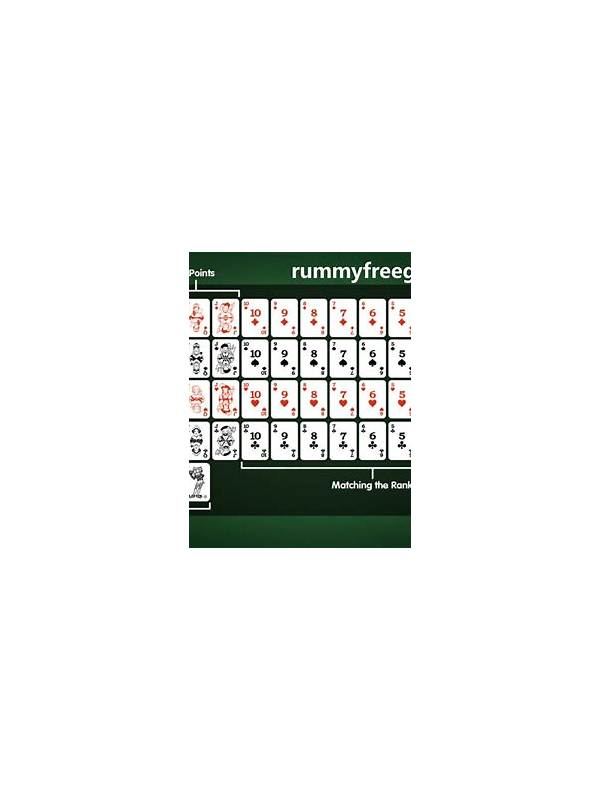
Two cards can carry the same point value and still deserve very different treatment. Points matter because they affect the cost of being caught with an unfinished card, but point value alone does not tell you how useful a card is inside your hand. When equal-point candidates compete for a discard, use a wider comparison.
First ask how many reasonable groups each card can join. A middle card may connect to more neighboring ranks, while an edge card may have fewer routes. This is not a guarantee that the middle card is better; it is a reminder to inspect its actual neighbors. If one card belongs to a pair and also sits next to a possible sequence, it may have more current work than a card that is merely part of a loose pair.
Next ask whether the card is supporting a group you can realistically finish. A theoretical connection is weaker than a route with several available cards. Consider what you know from the discard pile and exposed melds, while remembering that unseen cards remain uncertain. A card with many imagined partners can be less valuable than one with a single but plausible completion.
Then compare release cost. If you discard card A, what information or flexibility disappears? If you discard card B, does your hand become easier to read and reorganize? A card that has two jobs may be worth keeping briefly, but only if those jobs are still alive. A flexible card that no longer fits any practical plan is not valuable merely because it once had options.
Finally examine penalty and timing together. If the turn is early, keeping a moderate-risk connector may be reasonable while you gather information. Late in the hand, the same card may need a clear deadline. Equal points do not mean equal urgency. A card that is easy to replace may be a better discard than one whose replacement would require an exact draw.
For practice, write two equal-point cards at the top of a review page. Under each, list current groups, realistic missing cards, number of jobs, and release cost. The better choice is not always the card with the lowest immediate value. It is usually the card that leaves your whole hand with the clearest and most recoverable structure.
Remember that table rules and timing can change the comparison. If a format gives a special role to a joker or uses a different penalty schedule, confirm those details first. A point comparison made under the wrong rules can be precise and still be useless.
Related Post

Rummy Comparison: Fixed Deadlines Versus Natural Plan Changes
Fixed deadlines create discipline, while natural plan changes offer flexibility; combining both can improve hand [...]
Rummy Tips: Compare Draws by the Number of Useful Cards
Counting broad improvement routes helps distinguish a promising draw from a tempting single-card hope. [...]