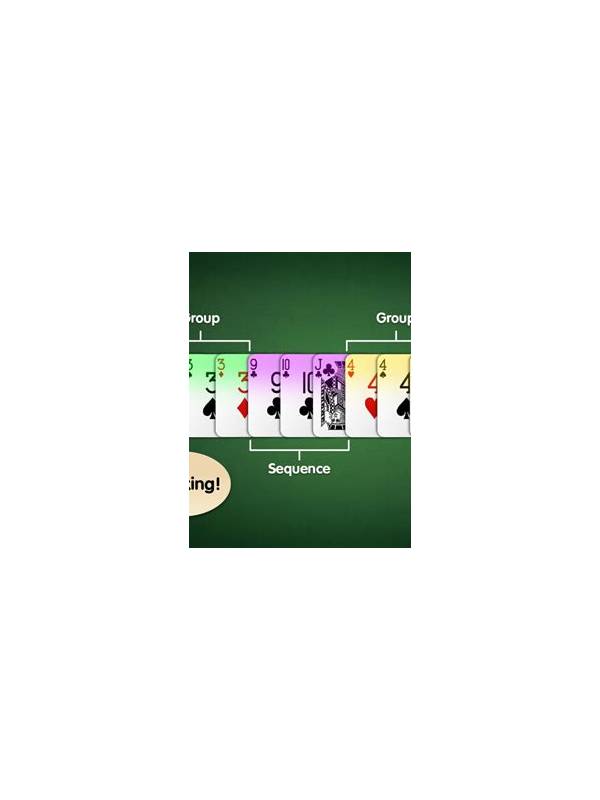
Rummy FAQ: Should You Keep Two Similar Pairs?
Two similar pairs often look promising because each could become a set or help form a sequence. Yet pairs are not automatically valuable. Their usefulness depends on rank, suit, nearby cards, and how much of your hand they occupy. The right question is not “Can either pair improve?” but “How many realistic improvements do they have?”
Begin by listing the cards that could help each pair. A same-suit pair with adjacent ranks may have several sequence routes. A pair of distant ranks may depend mainly on matching cards for a set. If both pairs need the same limited card, they are competing projects, not two independent options. Recognizing that competition is often the key decision.
Consider the rest of the hand. Keeping two pairs can be reasonable when you already have a secure pure sequence and enough room to develop one pair. It is risky when the pairs prevent you from building the required sequence or leave several high cards unconnected. Hand structure should decide the priority, not the visual neatness of the pairs.
Set a deadline for the weaker pair. Give it one or two turns to gain a concrete connection, then compare it with the current discard options. A deadline avoids the common mistake of carrying a pair simply because it was attractive earlier. If the pair still has multiple routes and low point cost, it may earn another turn; otherwise release it.
Jokers change the calculation, but they do not remove it. A joker may make one pair more useful while leaving the other untouched. Check whether using the joker creates a valid required sequence and whether another placement would complete more of the hand.
In short, keep two pairs only when they support different, realistic plans and the rest of the hand can tolerate the space. When both are narrow or expensive, choose one and discard the other. A clear priority is usually stronger than a hand full of hopeful pairs.
Remember that a pair can also have defensive value. Holding a card may deny an opponent a visible opportunity, although this should not become an excuse for keeping every duplicate. Your own requirements and point exposure come first. If you use this defensive idea, write down the evidence that supports it: a recent pickup, a repeated search for a rank, or a discard pattern. Without evidence, defensive value is only speculation.
When in doubt, protect the pair that supports the clearest requirement and release the pair with the weaker exit. This creates a clean decision for the next turn and keeps the hand from drifting between two equal hopes.
Related Post

Rummy Strategy: Use a Plan Deadline in the Middle Game
A middle-game deadline prevents a narrow rummy combination from consuming flexibility indefinitely. [...]
Rummy FAQ: What Is a Route Bottleneck?
A route bottleneck is the narrow requirement that limits an otherwise promising rummy plan. [...]