Rummy FAQ: Why Can More Information Make a Decision Harder?

More information is not always more clarity. A discard pile can show several possible routes, and opponent actions can suggest different interpretations. If every observation receives equal attention, the hand may feel more confusing rather than less. Useful information is information that changes a specific decision.
Begin with your own requirements. Ask which missing cards would materially improve your hand and which visible cards affect those requirements. A discard that does not connect to any credible route may be interesting but not useful. This first filter prevents the table from becoming a list of unrelated clues.
Next separate facts from guesses. “A card was discarded” is a fact. “The player cannot need that suit” is a guess. Players may discard for many reasons, including penalty reduction, a route change, or a mistake. Treat patterns as possibilities until repeated evidence supports them. Overconfidence based on one action can cause you to reject a good draw or hold a poor card.
Use a decision budget. Select one or two observations to apply to the current turn, then stop gathering data until the next meaningful event. For example, you may note that a visible discard improves your sequence while also carrying information cost. That is enough to make the decision; you do not need to reconstruct every opponent’s hand.
The best filter is actionability. If a fact would not alter your draw, discard, or route review, set it aside. This is not ignoring the table. It is protecting attention for information that can improve the hand.
After a session, write down one observation that helped and one that distracted you. Over time, the comparison can reveal whether you overread isolated discards, follow patterns too late, or miss simple information from your own hand. Information becomes an advantage only after it has been translated into a clear, proportionate action.
One useful habit is to attach every observation to a question. Instead of thinking, “That player took a seven,” ask, “Does this change which seven I am willing to release?” If the answer is no, return attention to your own requirements. If the answer is yes, state the change precisely and avoid adding extra assumptions. This keeps the table readable when several players act quickly. It also creates better post-game notes: distinguish an observation that changed a decision from one that merely felt interesting. The strongest information is often simple and local, such as a card you now know is less likely to return to the discard pile.
Related Post
Rummy FAQ: Why Is a Pure Sequence So Important?
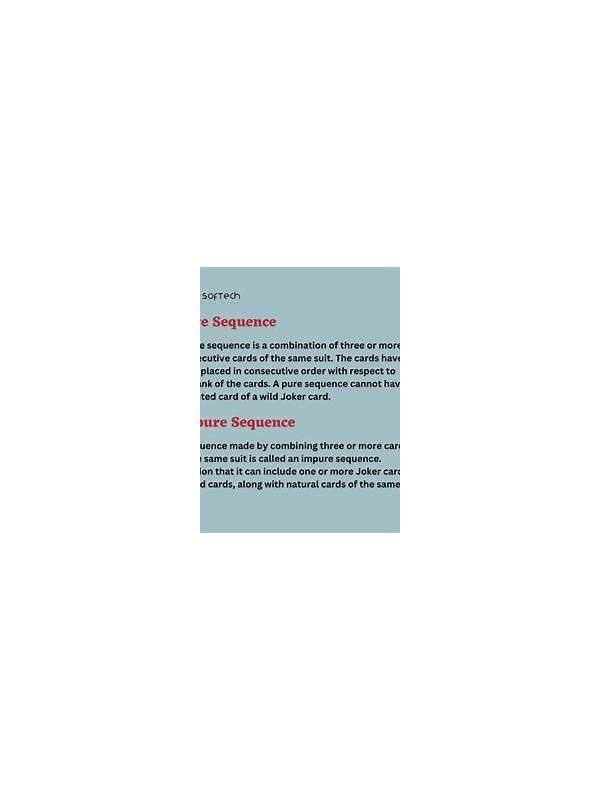
This FAQ explains the role of a pure sequence and why building one early simplifies [...]
Rummy Practice Review: Compare Plans Instead of Winners
Reviewing alternative plans reveals more about decision quality than counting wins alone. [...]