Rummy FAQ: When Should You Break a Pair?
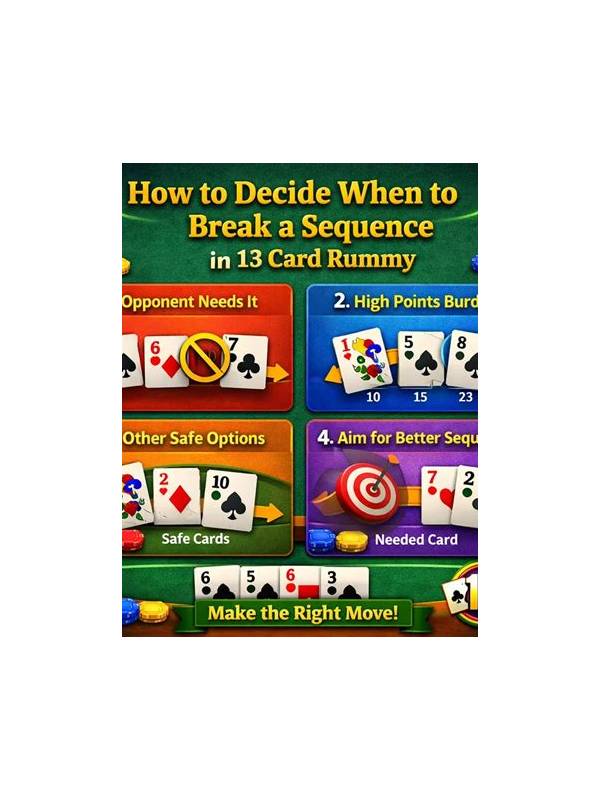
Break a pair when keeping it blocks a stronger structure or when the pair has become too narrow to justify another draw. A pair can feel valuable because it is already connected, but connection alone does not guarantee completion. Compare it with the plan you would preserve by releasing one of its cards.
First ask whether the pair is part of a natural sequence. If the cards are adjacent in the same suit and can be extended in more than one direction, keeping them may be reasonable early in the hand. If they require one exact card and several turns have passed without progress, their value should be reassessed. A pair that began flexible can become a liability as the hand develops.
Then check for overlap. One card may connect to a nearly complete sequence elsewhere, while its pair partner supports only a speculative set. Breaking the pair can be correct if it reduces the number of unfinished groups or protects a required natural sequence. Do not preserve symmetry merely because the cards look tidy together.
Timing and scoring matter. Near the end of a round, a pair of low cards may be safer to retain than a lone high card, but a legal finish still comes first. In formats where a declaration requires a particular arrangement, verify that your choice supports the rule rather than only lowering visible points.
If you break the pair, do it with a replacement plan. Say what remains, what draw would help, and when you will stop waiting. Without that plan, breaking pairs can become random card movement. Also remember that the next player may take the card you release; that possibility is part of the trade-off, not proof that the discard was wrong.
There is no universal turn number at which every pair must be broken. Use evidence from the hand: number of possible improvements, overlap with stronger groups, remaining time, and penalty risk. The best pair is the one that contributes to a valid finish, not necessarily the one that survives the longest.
Record the reason when you break a pair during practice. Later, check whether the replacement plan actually created more flexibility or only changed the appearance of the hand. This simple review separates useful adaptation from restless rearrangement. Over time, you will become better at recognizing when a pair is an asset and when it is merely familiar. The record also shows whether your choices change appropriately as the hand gets shorter, which is often more useful than memorizing a fixed rule.
Related Post
Rummy How-To: Create a Simple Endgame Checklist
Use a short endgame checklist to prevent avoidable declaration and scoring errors. [...]
Rummy Decision Fatigue: Signs and Simple Break Rules
Recognize decision fatigue during rummy and use practical break rules to protect focus. [...]