Rummy FAQ: Why Does a Pure Sequence Matter First?
This check is quick enough to repeat whenever the hand changes significantly.
Learning this principle early prevents attractive but incomplete groups from creating false confidence during later hands. It also makes final checks faster and calmer. Use it consistently in practice.
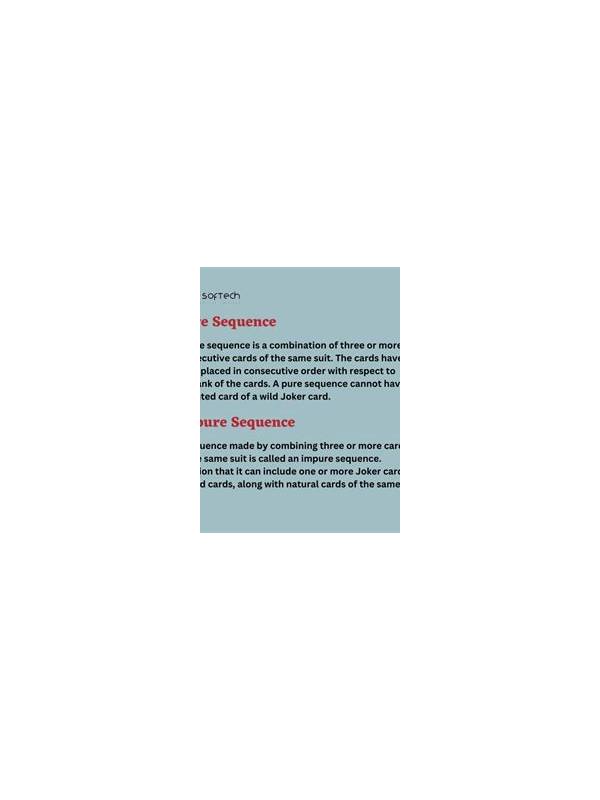
Before a declaration, inspect the pure sequence separately from the other groups. Confirm the suit, consecutive order, and whether any card is being used as a joker substitute. Then check the remaining cards for complete groups and count every card exactly once. This pause catches avoidable mistakes. If the app provides an automatic declaration check, use it as a convenience but still understand the rule, especially when moving between formats.
What is a pure sequence? In common Indian rummy formats, it is a consecutive group of cards from the same suit without a joker substituting for a missing card. Exact rules can vary, so read the table or platform rules before playing. The key idea is that a hand may contain attractive sets and joker-assisted groups but still fail to qualify without the required pure sequence.
Why inspect it first? It is a foundational legality check. If you spend several turns improving other groups while ignoring the pure sequence, you can reach the end with a hand that looks organized but cannot be declared. Checking it early tells you which cards deserve protection and which plans must remain secondary.
Does it have to be the first group I build? Not necessarily. You may draw a card that completes a set or another sequence first. “First” is best understood as first in priority, not always first in physical construction. Keep the requirement visible while evaluating every draw, and avoid sacrificing a realistic pure-sequence route for a small improvement elsewhere.
Can a joker help? In many formats a joker can assist other groups or non-pure sequences, but it cannot replace the missing card in a pure sequence. Some rules distinguish printed and wild jokers, so confirm the local definition. Never assume a joker solves every legality problem.
What should I do when no pure sequence is obvious? Identify connected same-suit cards and flexible connectors, then estimate which route has several possible improvements. Release cards that are isolated and costly only when doing so does not destroy your best chance. Keep checking after each draw. The requirement narrows the objective, but a calm review of legal structures and alternatives makes it manageable.
Related Post
Rummy Guide: Build a Flexible First Meld
Learn how to shape an opening meld that keeps several useful follow-up draws available. [...]
Rummy How-To: Review a Hand Without Replaying Every Turn
A three-moment review captures the most useful lessons without exhausting the player. [...]