Rummy Guide: Evaluate a Meld by What It Leaves Behind
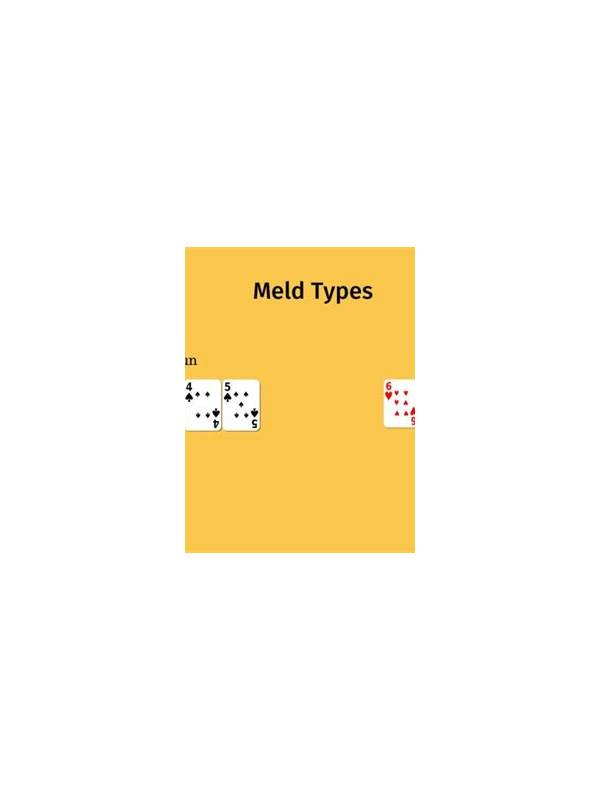
Players naturally focus on the cards that form a new meld. The less visible question is what remains after those cards are grouped. A meld is useful when it reduces uncertainty and leaves a manageable set of cards, not merely because it looks complete on the table.
Before accepting a grouping, identify the leftovers. Are they a low-point pair with several routes, a single flexible connector, or disconnected high cards? A completed set paired with difficult leftovers may be less valuable than a sequence that leaves two easy combinations. The correct answer depends on the rules and the stage of the hand, but leftovers should always be counted.
Check requirements next. If the meld is not a pure sequence, ask whether it helps satisfy the required structure or only creates a temporary display. A joker-assisted group can be valid in some formats while still consuming a flexible resource that would have solved a different problem. Label the resource cost before making the group permanent.
Consider whether rearranging creates or removes routes. Sometimes combining cards closes a gap that could have connected two groups. Sometimes keeping cards loose preserves more possibilities than putting them into a neat but narrow meld. Do not rearrange for appearance. Rearrange when the resulting hand has a clearer path to a legal finish.
Use a final question: if the next draw is unhelpful, is the hand easier to play than before? If yes, the meld likely improved the position. If no, it may be a local gain that needs more support. This method does not reject attractive melds; it simply measures their effect on the cards you still need to manage. Try evaluating the meld before and after sorting the leftovers. If the cards outside the meld become easier to classify, the grouping has probably reduced complexity. If they become a pile of isolated cards, the apparent gain may be cosmetic. This is also a good time to check whether the group can be separated without destroying a required structure. A meld can be useful now and still remain reversible, which is often preferable while the hand contains many unknowns. If the grouping uses a wildcard, identify the exact job it performs. Reserving it for every possible role can make the hand appear stronger than it is. One explicit assignment is safer than several imaginary ones.
The leftover test is useful even when the meld is not yet final. Lay the cards out, describe the next two plausible draws, and see whether both outcomes leave a workable hand. If only one outcome survives, treat the grouping as conditional and avoid discarding the cards that would be needed to rebuild it.
Related Post
Rummy Pair Decisions in the Middle Game
Use a deadline and a replacement test to decide whether a rummy pair should stay [...]
Rummy Table Layout: Why Consistent Organization Helps
A consistent card layout reduces visual searching and makes hand verification easier during online rummy. [...]