Rummy Guide: Use a Hand State Snapshot Before Drawing
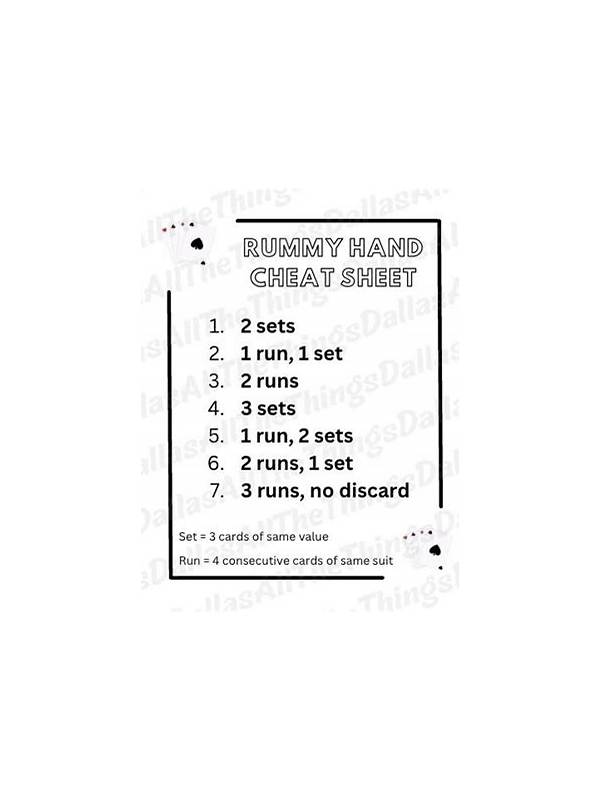
Players often evaluate a new card before remembering what the hand was trying to do. That order can cause unnecessary plan changes. A hand state snapshot takes only a moment and gives each draw a clear context.
Before drawing, name your current structures. Separate completed groups from partial sequences, pairs, and isolated cards. Then identify the single most important requirement, such as completing a pure sequence or reducing a dangerous high-card holding. This does not mean committing to one plan forever; it simply establishes a baseline for judging the next card.
Next, identify one backup route. A backup might use a pair as a group, connect a flexible middle card to another suit, or release a partial structure if its connector does not appear. Keep the backup concrete. “I will find something” is not a route, while “this pair can become a group if another matching rank appears” is easier to evaluate.
When the new card arrives, compare it with the snapshot. Does it complete a requirement? Improve the strongest partial structure? Create a better backup? Or merely look interesting because it is new? If it does none of these, it may be a discard candidate even when it connects loosely to another card.
The snapshot also helps prevent overvaluing completed groups. A completed group is stable, but the remaining cards still determine whether the hand can finish legally. If an established group is hiding several high, unrelated cards, the priority may be to simplify those cards rather than begin another ambitious sequence.
Update the snapshot after the discard, not during every thought. Record the new strongest structure, the main missing requirement, and the most realistic fallback. This keeps the hand state current without forcing you to narrate every possible combination. In a fast game, use short labels such as “one pure run,” “pair route,” and “high-card risk.”
The routine is especially helpful after a disruptive draw or an opponent pickup that changes the availability of a card. It encourages adaptation based on evidence instead of excitement or frustration. Over time, you will spend less effort asking what the hand might become and more effort selecting the best action from the hand it actually is. You can make the snapshot physical in a practice game by arranging cards into small labeled groups. On a live table, use a fixed scan order from completed structures to partial structures to liabilities. A fixed order reduces the chance that one conspicuous card will dominate your attention.
Related Post
Rummy Guide: Revalue Cards After a Joker Appears
A joker can change several card roles at once, so reassessing the whole hand is [...]
Rummy Comparison: Scarce Cards and Repeated Cards
Comparing scarce and repeated cards helps players adjust their expectations across different rummy tables. [...]