Rummy Guide: Identify a Group That Is Complete Enough
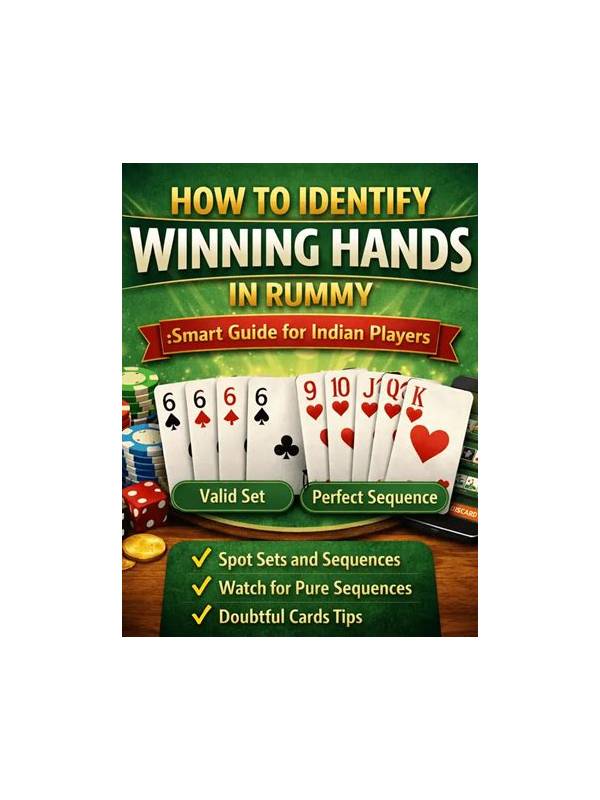
Players sometimes keep improving a group that is already good enough for the format. This can happen because a longer sequence looks satisfying or because the group still has possible additions. The important distinction is between a group that is legally complete and a group that is merely attractive. Once a group meets the requirement, inspect the rest of the hand.
Begin with the active rules. Confirm what makes a sequence or set valid, whether special cards have restrictions, and how many groups are required. Do not use a familiar rule from another format. A group is complete only under the conditions that govern the current table.
After confirming legality, label the group complete, useful to extend, or unsafe. Complete means it satisfies the relevant requirement and does not need another card. Useful to extend means an addition would materially simplify the remaining hand. Unsafe means the group only looks finished because a rule or card identity has been assumed incorrectly.
If a complete group has no extension benefit, protect it reasonably and move attention elsewhere. An optional addition may consume a card needed for another group. Compare the improvement in the whole hand, not the visual pleasure of a longer run. A completed group can be an anchor precisely because it no longer needs active attention.
Recheck the label after a reorganization. A card moved into another route may change whether the group remains legal. This is especially important when one card was informally supporting two structures. Keep the final groups explicit before a declaration or a high-cost discard.
Practice with sample hands by circling the first legal completion rather than the longest possible group. Then ask what the remaining cards need. This trains the habit of stopping at sufficiency. It also reduces the risk of carrying valuable extensions while an incomplete required group receives no attention.
“Complete enough” does not mean careless. It means the group has achieved its current purpose under the rules. Recognize that point, preserve it, and use the saved attention to solve the part of the hand that still needs work.
This habit is especially useful before a declaration. Read each group against the rules, but do not keep changing a valid group merely because another arrangement looks more elegant. Confirm the required structure, inspect the remaining cards, and then stop editing. Sufficiency protects attention when unnecessary movement can create an avoidable error. A stable stopping point is itself a useful part of hand discipline.
Related Post
Rummy Tips: Test a Discard for Information Leakage
Consider what your discard may reveal while remembering that a visible clue is not the [...]
Rummy How-To: Review a Hand Using Three Timelines
Looking at a rummy hand before, during, and after the turning point reveals different lessons [...]