Rummy Guide: Measure How Much a Group Depends on Luck
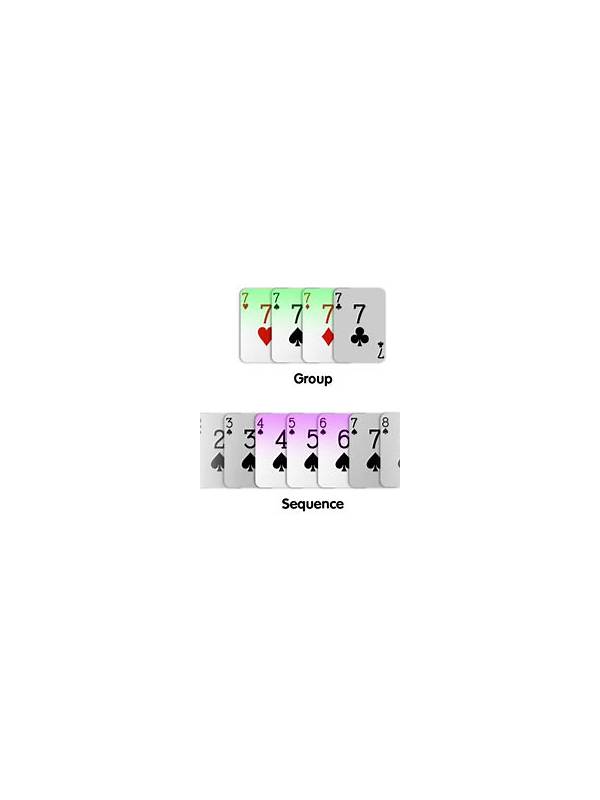
Some rummy groups are nearly built; others are mainly wishes attached to a few cards. Measuring luck dependence helps distinguish them. The aim is not to calculate exact probability. It is to count how many specific things must happen before the group becomes useful.
First describe the group in plain language. Say “this pair needs one of several neighboring cards” or “this set needs one exact rank.” Then count the required steps. A group that needs one clear card has lower dependence than a group that needs two different additions in sequence. If the group also requires another card to be discarded before it can fit, include that extra step.
Next check timing. A route may be reasonable early in a hand but too narrow later. Give the group a deadline expressed in turns or events. For example, wait until the next meaningful draw, then reconsider if the needed evidence has not appeared. The deadline prevents passive hope from occupying the hand indefinitely.
Check alternatives. A narrow group is less dangerous when its cards can move into another credible group. A pair that can become a set or support two sequences has an exit. A pair that can only be completed in one way has more dependence, even if its cards look close.
Public information can refine the estimate. Visible discards may reduce the usefulness of a route, while a new card may create a wider option. Avoid treating unknown cards as guaranteed. Use words such as broad, narrow, supported, and exposed rather than pretending to know an exact percentage.
Finally, compare luck dependence with point exposure. A narrow low-point group may be acceptable for a short window. A narrow high-point group needs stronger evidence or a faster exit. This is a trade, not an absolute rule. Write down the route, the deadline, and the fallback. If you cannot name all three, the group is probably being carried because it feels promising rather than because it is well supported. That distinction makes simplifying decisions easier. Finally, compare luck dependence with point exposure. A narrow low-point group may be acceptable for a short window. A narrow high-point group needs stronger evidence or a faster exit. This is a trade, not an absolute rule. Write down the route, the deadline, and the fallback. If you cannot name all three, the group is probably being carried because it feels promising rather than because it is well supported. That distinction makes simplifying decisions easier.
This measurement also helps explain why two similar-looking pairs deserve different treatment. One may have several legal neighbors and a low point cost, while the other depends on one exact rank and blocks a better discard. Describing the steps makes the difference visible before frustration or attachment takes over.
Related Post

Rummy Table Notes: Recording Public Information Fairly
Keep compact notes about visible play while avoiding assumptions that go beyond the evidence. [...]
Rummy Variant Check: Questions to Ask Before a New Game
These questions help players understand a new rummy variant before committing to a table. [...]