Rummy Guide: Read Discard Patterns Without Guessing Too Much
Rummy Guide: Read Discard Patterns Without Guessing Too Much
Discard piles contain information, but they do not provide a complete picture of another player’s hand. A card may be discarded because it is useless, because it was a duplicate, or because the player is deliberately hiding a plan. Reading patterns well means collecting small clues without turning them into certainty.
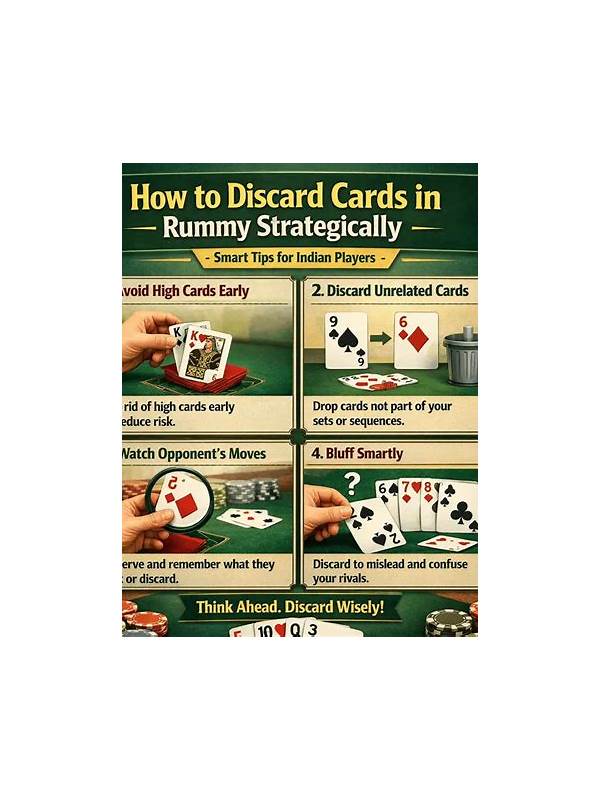
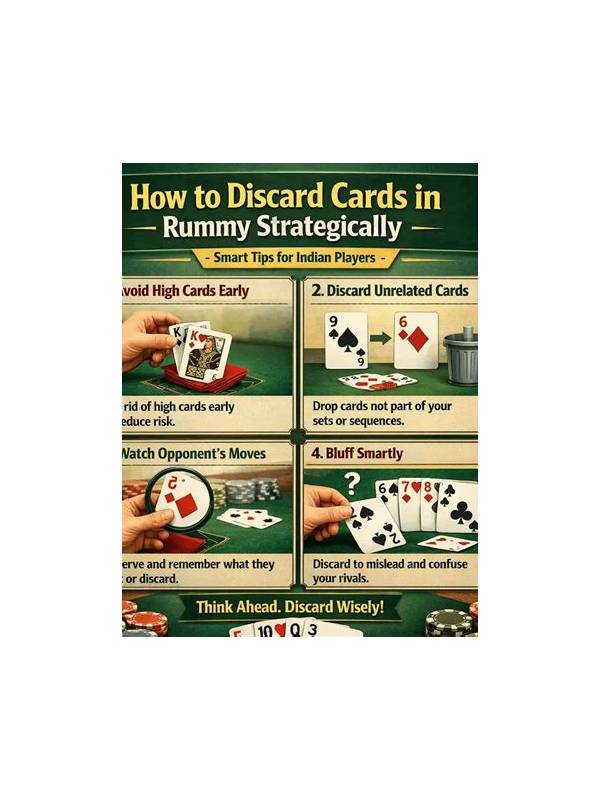
Begin with categories rather than individual cards. Notice whether a player repeatedly releases high cards, cards from one suit, or cards near the same rank. Several high-card discards may suggest a low-penalty hand-building approach, but they do not prove that the player has completed sequences. A mixture of unrelated low cards may indicate early sorting, though it may also reflect a different variant or a forced choice.
Pay attention to the draw source when the interface shows it. Taking from the discard pile is stronger evidence than simply declining a card. It shows that the visible card served an immediate purpose, but even then, the exact group is unknown. Avoid assuming that a taken 8 belongs to an 8-9-10 sequence; it could be filling a pair, extending another run, or preventing a difficult discard.
Use observations defensively. If a player has released several cards of a suit, be cautious about feeding them nearby cards from that suit until your own hand benefits clearly. If they keep cards around a rank, do not automatically conclude that every card around that rank is unsafe to discard. Your goal is to reduce obvious assistance, not to predict perfectly.
Separate facts from interpretations. “They discarded two hearts” is a fact. “They cannot use hearts” is an interpretation. Keeping this distinction helps you update your view when a later action contradicts it. You can use a simple confidence scale: low confidence for one clue, moderate for a repeated pattern, and high only when several actions point in the same direction.
Finally, protect your own tempo. Watching opponents is useful only after you have identified your best legal hand improvements. Do not hold a weak card solely to avoid an imagined benefit to someone else. A sound discard that advances your structure is often better than a defensive guess. Observation should sharpen your comparisons, not replace them. Watch changes rather than memorizing the entire pile. A repeated pattern deserves more attention than an old isolated discard. If your interpretation requires several assumptions, lower your confidence and return to cards you can verify. This keeps observation useful in noisy games and reduces the tendency to invent a story around one surprising move. A short record of categories can improve awareness without turning the game into constant bookkeeping.
Related Post

Rummy Safety: Review Permissions After an App Update
An app update is a useful moment to check whether its access requests still match [...]
Rummy How-To: Make a Decision Tree for the Next Draw
A small decision tree helps rummy players prepare for several draw outcomes without trying to [...]