Rummy How-To: Explain a Discard Without Rewriting the Whole Hand
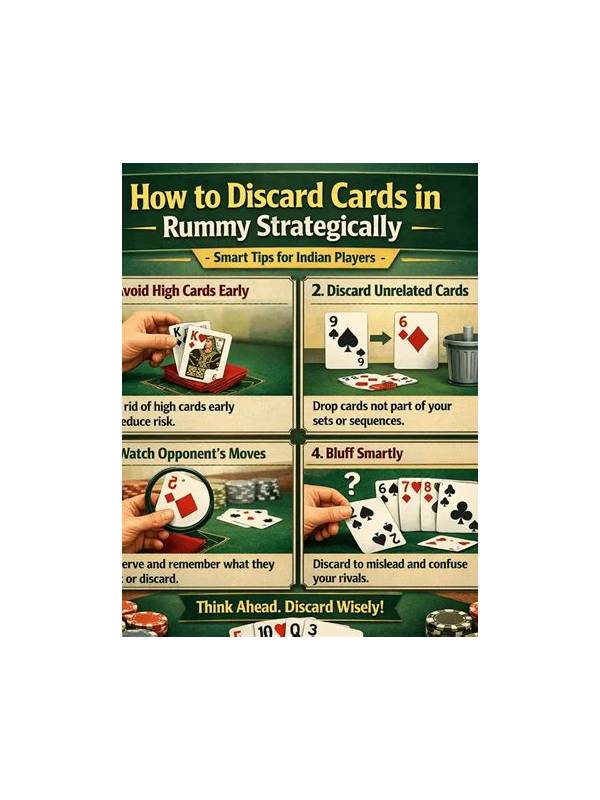
Explaining a discard is a useful practice because it exposes the reason behind a choice. The explanation does not need to retell every card in the hand. A short structure is enough: state the role of the card, name the alternative, and identify the uncertainty you accepted.
Begin with the card’s role. Was it isolated, part of a weak sequence, expensive to hold, or redundant after a new draw? Use observable language rather than judging the move. “It had one possible connection and high exposure” is more useful than “it was a bad card.”
Next, name the alternative you considered. Perhaps you could discard a lower-point connector, break a flexible pair, or keep the card and wait for a precise draw. Include only realistic alternatives. A choice that would require several unlikely events is a theoretical line, not an equal option.
Finally, identify the uncertainty. You might have been unsure whether an opponent was collecting the suit, whether the needed card remained available, or whether the format rewarded immediate reduction. Naming uncertainty prevents hindsight from turning the decision into a false certainty.
A complete explanation can fit in three sentences: “I discarded the nine because it was isolated and carried more exposure than my other loose cards. I considered releasing the seven, but it connected to two plausible sequences. I accepted uncertainty about whether the nine could have become useful later.” This format is specific without being dramatic.
Use the explanation immediately after practice or during a weekly review. If you cannot explain a key discard in this format, mark it for closer study. Over time, repeated missing reasons may show that you need a pre-discard pause or a clearer hand-sorting method.
The point is not to defend every move. It is to make decisions visible enough to improve. Short explanations preserve the important evidence while leaving room to examine the whole hand when necessary.
You can compare explanations from several sessions by underlining repeated phrases. Repeated “I hoped” statements may indicate that you need a clearer next-card test. Repeated references to time may suggest a pacing problem. This turns language into a diagnostic tool without requiring complex statistics. Keep the exercise supportive: the objective is to improve the next explanation and decision, not to construct a case against your earlier self.
Invite a trusted practice partner to read an explanation without seeing the result first. Ask whether the reason is clear and whether the alternative sounds realistic. The partner does not need to judge the move or provide a winning line. Their task is to test whether your explanation communicates the information and uncertainty that shaped the choice.
Related Post
Rummy Comparison: Card Confidence and Plan Confidence
Separating confidence in a particular card from confidence in the overall plan leads to calmer [...]
Rummy Safety: Audit Links Before Downloading a Game File
Follow a cautious checklist for evaluating a download link before opening an unfamiliar game file. [...]