Rummy Guide: Use a Two-Column Plan for Uncertain Cards
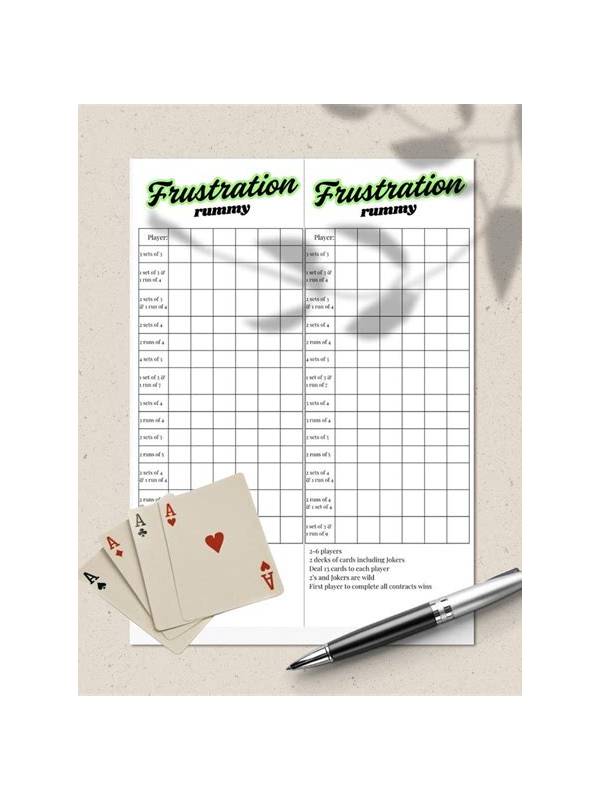
An uncertain rummy hand often feels difficult because every card appears to have several possible jobs. A two-column plan makes that uncertainty visible without pretending that the best route is already known. The first column is for immediate uses: cards that complete a legal group, protect a required sequence, or reduce a clearly expensive loose card. The second column is for future uses: cards that connect to several likely draws but do not yet form a reliable meld.
Start by writing the cards in suit and rank order. Under “now,” list only combinations that are already legal under the table’s rules. Do not include a pair merely because it looks attractive; a pair is a possibility, not a completed sequence or set. Under “later,” record the exact missing ranks or suits. For example, a seven and nine of the same suit need an eight, while two queens of different suits need another queen of a suitable suit. Specific missing cards are easier to evaluate than a vague feeling that a hand is promising.
After each draw, update both columns. A card may move from later to now, or it may make an old route less useful. This prevents a common error: continuing to protect a plan after its key card has become unlikely or after another route has become much cheaper. Keep the list short. Two or three active routes are enough; a long inventory becomes another form of distraction.
Use the columns before choosing a discard. Ask which card removes the fewest immediate options and leaves the most manageable future route. A high card with no connection may be an obvious candidate, but a connected card can still be weaker if its route requires several specific draws. The point is not to calculate perfect odds. It is to compare commitments consistently and notice when a card is doing nothing useful.
At the end of the hand, review whether your “later” column was based on evidence or hope. Did visible discards support the route? Did you hold a card because it was flexible, or because you disliked releasing it? This small distinction turns a planning tool into a learning tool. With practice, the two-column method becomes a quick mental habit: immediate structure on one side, conditional possibilities on the other. The method is also useful when several cards look equally disposable. Compare the remaining hand after each hypothetical release and ask which version is easier to explain. A clear remaining route is usually preferable to a hand that depends on remembering four unrelated possibilities. If you play online, use the time before the timer starts to make this comparison rather than waiting until the last seconds. Keep the language descriptive and avoid calling a route “lucky” or “safe” without identifying why. Clear descriptions make later review possible and reduce the chance that an attractive but vague plan controls the next turn.
Related Post

Rummy Safety: Avoid Playing Through Fatigue
Recognizing fatigue early helps rummy players protect judgment, attention, and spending boundaries. [...]
Rummy Guide: Use a Decision Log for Repeated Mistakes
A small decision log can reveal recurring habits that are hard to notice during play. [...]