Rummy How-To: Build a Small Vocabulary of Hand States
Hand reviews become more useful when “it felt bad” is replaced by a specific description. A small vocabulary of hand states can help. You might use confirmed, developing, narrow, redundant, exposed, and overloaded. These are labels for analysis, not official rules, so adapt them to your rummy variant.
Confirmed means a group already satisfies the relevant structural requirement. Developing means a group has a realistic path to completion but still needs a card. Narrow describes a plan dependent on one exact rank, suit, or event. Redundant means two cards serve the same role and one may be released. Exposed means a card carries a visible risk if another player can use it. Overloaded means the hand contains more competing plans than you can support.
At the beginning of a turn, label each group or loose card briefly. For example: “confirmed sequence, developing sequence, narrow pair, exposed high card.” Then draw and update only the labels that changed. This prevents a new card from forcing you to rebuild your entire mental model every time.
During review, connect the label to an action. A confirmed group is usually protected. A narrow plan may receive a deadline. A redundant card is a discard candidate. An exposed card deserves comparison against its point penalty. An overloaded hand may need a simplification move rather than another speculative hold.
Keep the vocabulary small. Too many categories slow play and make labels feel like decoration. After several sessions, notice which terms actually predict useful adjustments. A clear shared language also helps in friendly practice, because you can discuss a decision without revealing private information or blaming a result. Precision in description is a practical skill: it turns a vague memory into a decision that can be tested next time. Use the labels in a notebook or verbally with a practice partner. Ask the partner to describe the hand before discussing a preferred move. If descriptions differ, compare evidence rather than arguing over the outcome. Labels should be temporary and revisable: a developing group can become confirmed, and an exposed card can become less concerning after new discards. This keeps the vocabulary tied to the current hand instead of turning it into a rigid prediction system. Do not use labels to criticize yourself after a poor result. “Narrow” describes the plan’s dependence on information; it does not describe the player. A short review might ask which label should have changed sooner and what cue would have prompted that change. Over several sessions, the vocabulary can reveal patterns such as repeatedly carrying overloaded hands or overlooking exposed high cards. Those patterns provide specific practice goals and are more helpful than a general instruction to “play better.”
Related Post
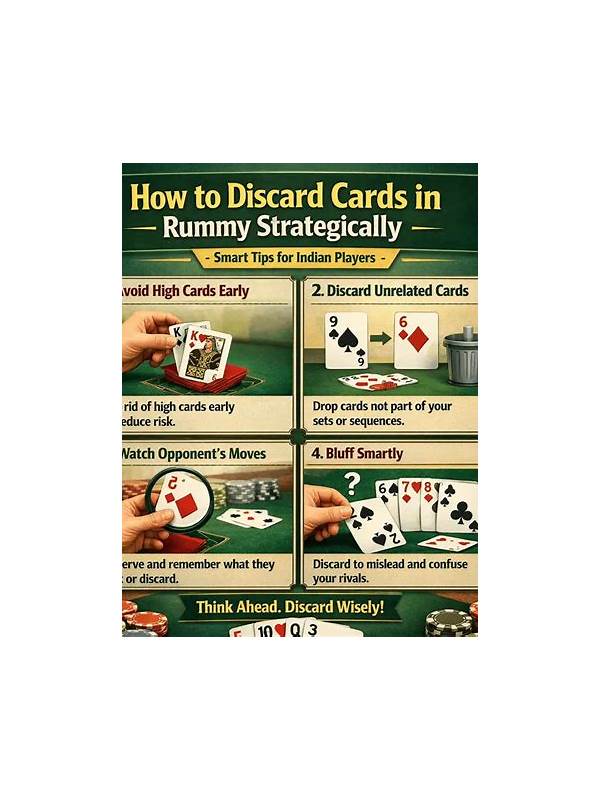
Rummy Discard Decisions: A Practical Card-Value Method
Evaluating flexibility, points, and information makes discards more deliberate in Indian rummy. [...]
Rummy FAQ: What Should You Check Before a Cash Withdrawal?
A pre-withdrawal checklist covers identity, limits, fees, and account security without promising a particular processing [...]