Rummy How-To: Create an Alternate Sequence Plan

An alternate sequence plan is a second way to organize related cards if your preferred completion fails. It is not a demand to maintain two full hands in parallel. It is a small fallback that protects flexibility without turning every possibility into a commitment.
Begin with your strongest current connection. Write down the cards that would complete it and the number of turns you are willing to wait. Then inspect the remaining cards for a different route. The alternate might use another suit, a set built from a pair, or a shorter sequence that leaves a flexible card available. It should share as little dependency as practical with the first route.
Give the alternate a trigger. Examples include missing the preferred draw once, seeing a relevant card discarded by another player, or reaching the point where a high-value card must be released. Without a trigger, an alternate plan is just another source of indecision. The trigger tells you when to stop protecting the original idea.
Avoid sacrificing a confirmed requirement merely to preserve an alternate. A fallback is useful because it handles uncertainty; it is not useful if it damages a legal group that was already secure. Check the full hand after every switch and confirm that your sequence requirements still meet the table’s rules.
Jokers can support an alternate, but assign them carefully. Decide whether the joker is repairing a narrow gap or enabling a broad structure. If using it in one route prevents a more valuable requirement elsewhere, the alternate may be weaker than it first appears.
Keep the plan visible with a short note such as “primary: neighboring ranks; fallback: pair to set.” This reduces the urge to invent a new strategy after every draw. At the end of the hand, compare the two routes: which had more useful cards, which survived opponent information, and which created a safer discard?
The habit is especially useful in the middle of a hand, when the first idea has not failed but is no longer comfortable. A defined alternate lets you adapt calmly and makes a disappointing draw informative rather than disruptive. Do not confuse an alternate with a prediction about what another player holds. It is simply a plan for your own cards under uncertainty. Keep it private if describing it would reveal more than you gain. When the hand becomes clearer, retire the weaker route completely and consolidate your attention around the structure that now has the best evidence.
Related Post
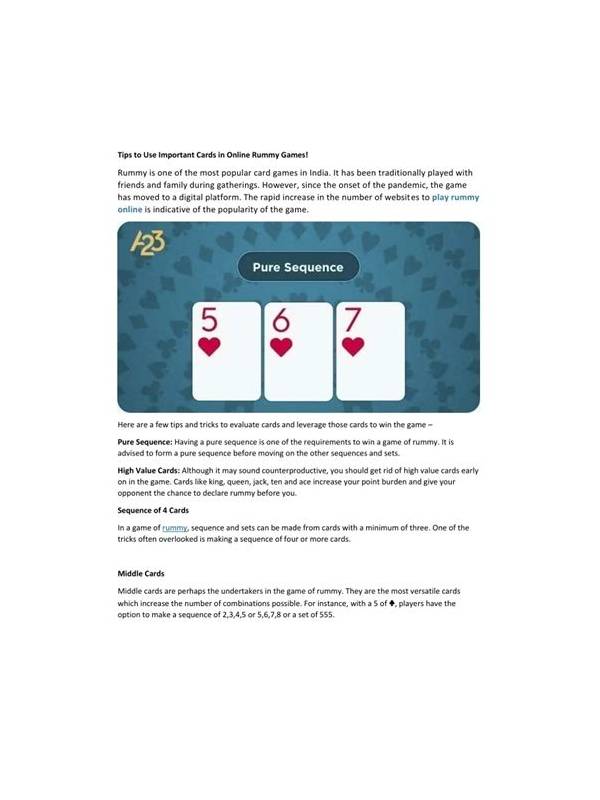
Rummy Screen Layout: Make Important Cards Easier to See
Rummy Screen Layout: Make Important Cards Easier to See offers practical guidance for clearer, safer, [...]
Rummy Session Breaks: Signs It Is Time to Pause
Recognizing fatigue and emotional pressure early helps keep rummy sessions recreational and controlled. [...]