Rummy How-To: Build a Three-Question Turn Review

When a rummy turn arrives, players can become distracted by the last card drawn or by an opponent’s quick move. A three-question review creates a short pause for useful analysis. It is simple enough for a live table and broad enough to work across common rummy formats.
Question one: What changed?
Compare the current hand with the previous turn. Did a new card create a sequence, strengthen a set, or leave every plan unchanged? Also note what disappeared when you discarded. This question keeps the decision grounded in actual information rather than a vague feeling that the hand is improving.
Question two: What is the main risk?
The risk may be structural: no pure sequence, too much deadwood, or a group that depends on a joker. It may be tactical: holding a card that could help an opponent or taking a visible card that reveals your direction. It may be practical: poor connection, low battery, or a distraction. Naming one main risk makes the next action more deliberate.
Question three: What is the cleanest next step?
Choose the action that improves the hand while keeping the risk manageable. A clean step might be taking a card that completes a natural run, discarding an isolated high card, or drawing from the closed pile when the open discard offers only a weak connection. “Cleanest” does not mean certain; it means supported by the best information currently available.
Keep the review short
The review should not become a long internal debate. Give each question a quick answer, then act within the platform’s time limit. With practice, the sequence becomes automatic: change, risk, next step. If two choices remain close, prefer the one that preserves more flexibility or leaves less penalty exposure.
Use it after the hand
A turn review is also useful for learning. After a hand ends, recall one turn where the three questions pointed in different directions. Did you overvalue a pair, ignore a safety issue, or miss a visible clue? Write one neutral note and move on. The purpose is improved process, not self-criticism.
This routine cannot control the cards you receive. It can control the quality of attention you bring to each turn. By separating change, risk, and next step, you reduce impulsive moves and make your reasoning easier to review later.
Use the questions consistently in practice hands, including free or offline games. Repetition matters because the value of a routine comes from using it under pressure, when a familiar prompt is easier to remember than a complicated strategy list.
Related Post
Rummy How-To: Use a Constraint Board for Difficult Hands
Learn a simple way to record the conditions that should guide a complicated rummy decision. [...]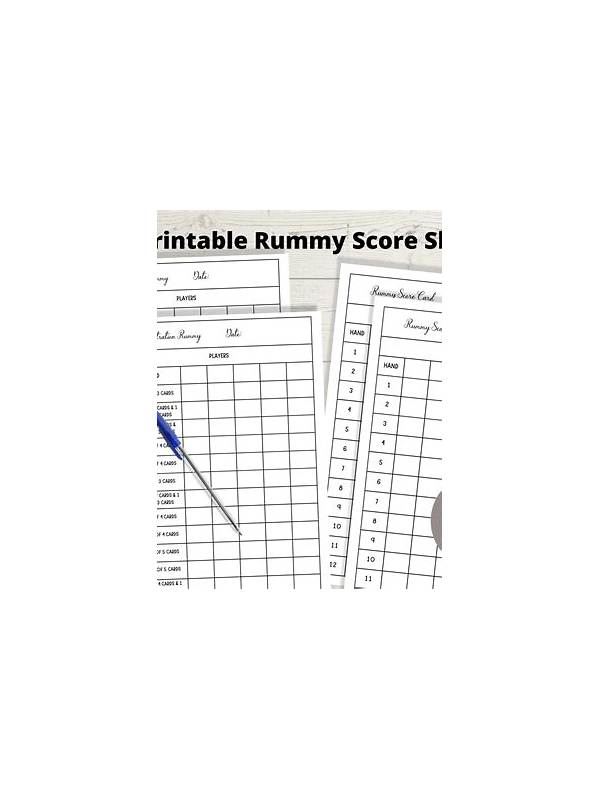
Rummy Tips: Use a Score Sheet That Explains the Round
A compact score sheet can preserve the decisions and context behind every rummy result. [...]