Rummy Safety: Recognize False Certainty During a Hand

False certainty is a common source of avoidable rummy errors. A hand may contain several neat groups, and that visual order can create the feeling that a declaration is ready. Before acting on that feeling, slow down and verify the requirements that actually determine legality.
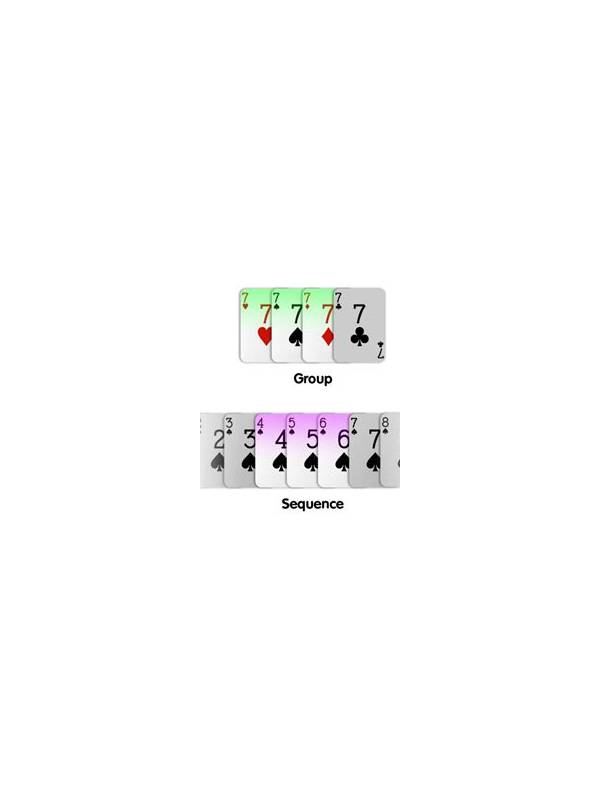
First, count the groups rather than the cards. A long-looking run may still be incomplete, while a pair of matching cards may not qualify as a set. Check that each group uses permitted ranks and suits and that no card is silently doing double duty. On a digital table, rearrange the cards so each candidate group is visually separate.
Next, identify the required pure sequence or other format-specific condition. Players often focus on reducing loose cards and forget that a minimum structure remains mandatory. If the interface offers a declaration preview, read its message carefully. A warning is information about the hand, not an invitation to click repeatedly.
Then inspect the cards left outside your groups. One apparently harmless high card can create a costly penalty, and one duplicate may be the missing piece of another legal group. Ask whether every remaining card has a clear home. If not, your hand is organized, but it is not finished.
False certainty can also come from a lucky draw. A single card may complete one group while leaving the overall structure unbalanced. Treat improvement as progress, not proof. The safest habit is to perform the same final check after a strong draw as after a poor one.
If you feel an urge to declare immediately, name the groups out loud or silently: pure sequence, second sequence, set, and remaining cards. This small act interrupts momentum and exposes gaps. Good rummy decisions are not made more reliable by excitement; they are made reliable by verification.
You can also use a short verbal checklist: “What is complete? What is required? What is left?” The first question prevents you from ignoring a legal group, the second recalls the format’s special conditions, and the third exposes loose cards. If the answers are not clear, delay the declaration and reorganize. A few seconds of uncertainty are safer than relying on a strong visual impression.
If the rules vary between tables, keep the checklist general and read the current format information before play. Never assume that a familiar arrangement is legal everywhere. A clear rules reminder is more reliable than memory, especially after switching between variants with different sequence or joker conditions.
Related Post

Rummy Comparison: Fast Discards Versus Careful Discards
Discard speed can support rhythm, while careful review protects accuracy; the right balance changes with [...]
Rummy How-To: Separate Practice Goals From Results
Build better rummy skills by measuring the process you intended to practice instead of only [...]