Rummy Comparison: Sets and Sequences as Building Blocks
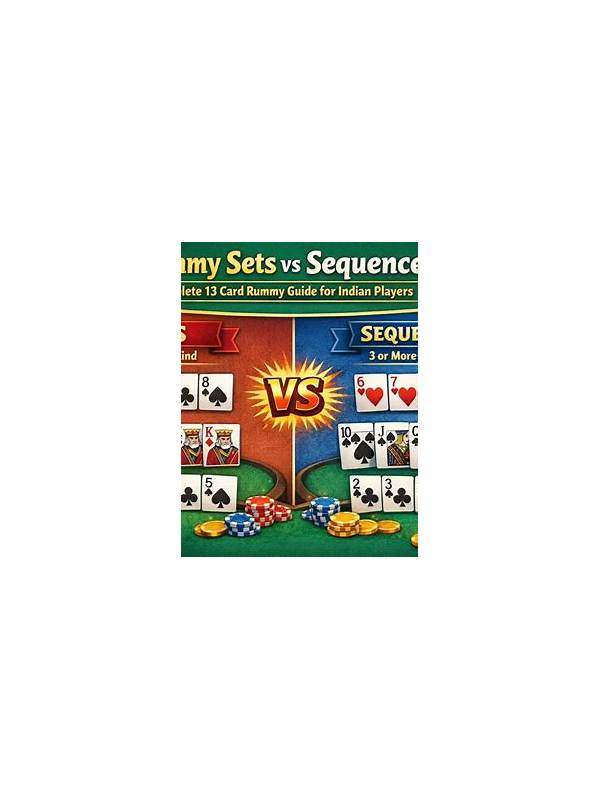
Sets and sequences are both important rummy building blocks, but they behave differently while they are incomplete. Understanding the difference helps you decide which plan deserves space in a crowded hand.
What a set offers
A set collects cards of the same rank in different suits, subject to the format’s rules. Its progress is often easy to see: a pair needs one matching rank, but the available suits and duplicate cards matter. A set can be efficient when you already hold compatible ranks and the remaining card choices are broad.
What a sequence offers
A sequence connects consecutive ranks in one suit. Middle cards may have two directions for expansion, while edge cards have fewer. A pair of neighboring cards can be promising, but a gap may make the plan dependent on one specific card. Suit information is therefore important when judging a sequence.
Compare flexibility
For each incomplete plan, count the reasonable cards that improve it and consider what happens if none arrive. A set may leave cards useful for another set; a sequence may preserve a longer chain. Neither type is automatically better. The stronger plan is the one that has useful outs and leaves a manageable remainder.
Consider rule requirements
Some formats require a particular number of sequences or a natural sequence. A beautiful set cannot compensate for a missing required structure. Read the table rules before committing, especially when using jokers or when deciding whether a group is actually complete.
Think of sets and sequences as tools with different shapes. Choose according to the cards you hold, the visible information, and the legal finish condition. Re-evaluate when a plan becomes narrow instead of defending it because it looked attractive at the start.
One practical exercise is to take a sample hand and list two legal finishes without drawing any new cards. Then mark which finish needs a natural sequence, which allows a joker, and which leaves the fewest loose cards. This exercise builds awareness of structure without the pressure of a live timer. Apply the same comparison during play, but keep it brief. A set and a sequence are not opponents; they can sometimes support one another. The decision is about the complete hand and the rules, not about declaring one building block universally superior.
This exercise also improves communication when playing socially: you can explain that a choice protected flexibility or satisfied a rule, rather than claiming that sets or sequences are always best.
Related Post

Rummy Strategy: When to Preserve a Flexible Middle Card
Middle cards can connect in several directions, so evaluate their option value before discarding them [...]
Rummy Connection Distance: Measuring How Much a Card Needs
Counting the distance between cards offers a practical way to compare promising and speculative combinations. [...]