Rummy Strategy: Use a Sacrifice Card Deliberately
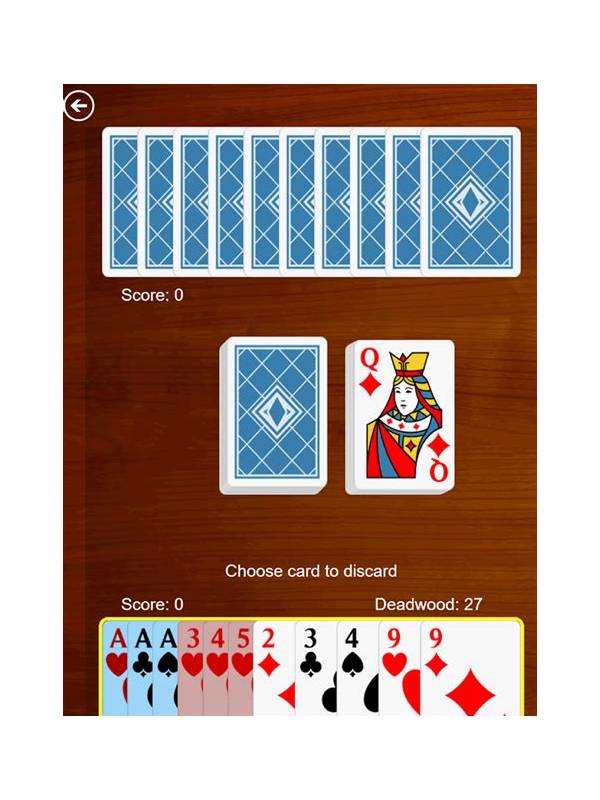
Sometimes a player must discard a card that still has some possible value. That card becomes a sacrifice: it is released to protect a stronger structure, reduce penalty, or create room for a more realistic route. The idea is not to discard carelessly. It is to make the cost visible and deliberate.
Start by naming what the sacrifice protects. It might preserve a completed sequence, free a slot for a near-complete group, or reduce the number of high cards held together. If you cannot describe the benefit, the discard may simply be a hopeful release. A good sacrifice changes the shape of the hand in a way you can explain.
Compare alternatives. Which other card could be discarded, and what would that choice damage? Check each candidate for immediate penalty, useful connections, and the possibility of becoming a safe discard later. A card with a low point value is not automatically the best sacrifice if it is the only bridge between two routes.
Timing changes the answer. Early in the hand, sacrificing a flexible card may be premature because many routes remain open. Later, protecting a stable structure may be more important than preserving every possibility. Use a simple deadline: if a route has not improved after several meaningful turns, consider releasing the card that supports it.
Do not use opponent psychology as the sole reason. A discard may appear unlikely to help another player, but that is difficult to know. Base the primary decision on your own structure and penalty. Public information can refine the choice, not replace it.
After the hand, review the sacrifice separately from the result. Did it protect something real? Did it make the remaining cards easier to organize? Was the route you protected actually better than the route you gave up? These questions build a repeatable habit. A deliberate sacrifice is not a sign that the hand was lost; it is a way to pay a known cost for a more manageable position.
Use neutral language when reviewing it. Say that you exchanged one possibility for another, not that you “threw away” a guaranteed win. This keeps the analysis connected to uncertainty. Over several hands, you can see whether deliberate sacrifices improve structure, lower penalties, or merely reflect a habit of abandoning cards too early. The record should show the tradeoff clearly enough that another review can challenge it. That clarity improves learning. Review it later.
Related Post
Rummy How-To: Recover After a Plan Becomes Unlikely
Follow a measured reset process when the cards needed for your original rummy plan stop [...]
Rummy Safety: Recognize Pressure From Countdown Timers
Timers can help a game move smoothly, but pressure should never push you past your [...]