Rummy Guide: Test Whether a Hand Plan Is Flexible
A flexible hand plan can survive an ordinary draw or discard. A narrow plan depends on one exact card, one opponent mistake, or a sequence that has not yet begun. Testing flexibility early helps you decide when to keep building and when to simplify.
Use the first-card test. Remove the single card you most want and ask whether another route remains. If removing it leaves only unrelated pairs and high cards, the plan is fragile. If two different cards can improve the same group, the plan has more resilience. This is not a probability calculation; it is a way to expose dependence.
Next, use the discard test. Identify one card you could release without destroying every route. A hand with no acceptable discard may be carrying too many hopes at once. Choose the card that has the fewest current connections, while remembering that a low-value card is not automatically the best discard.
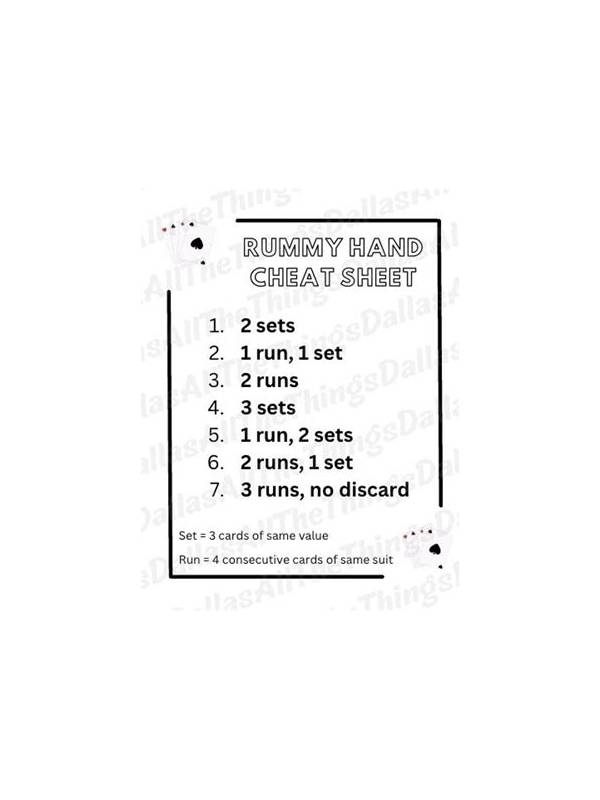
Finally, use the rule test. Can you explain how the hand will become a valid declaration under the table’s rules? Count required sequences and check whether a joker is being used legally. A visually tidy arrangement can still fail if it lacks a pure sequence or uses one card twice. Validity should remain the foundation of every plan.
If a plan fails all three tests, simplify it. Preserve any group already close to valid, release a high-cost card when appropriate, and wait for clearer information. Flexibility does not mean keeping every option forever. It means having enough sound options that one missed draw does not control the entire hand. Flexibility should also respect the table clock. A plan with many theoretical branches can become difficult to execute when the timer is short. Prefer a smaller number of clearly understood routes when the format moves quickly. Clarity is a practical form of flexibility because it lets you act before the decision window closes.
Do not confuse flexibility with refusing to commit. Once a valid route is strong and the remaining alternatives are weak, finish the route and protect it. The tests are there to improve commitment, not to keep every possibility alive indefinitely. A flexible plan should make the next decision clearer, not simply make the hand larger. The hand may still change, but your response remains grounded in several reasonable choices. A route is useful only when it remains compatible with the declaration rules and your available attention.
Related Post

Rummy Decision Quality on a Small Screen
Improve mobile play by separating visual accessibility problems from genuine strategic choices. [...]
Rummy FAQ: Why Does Sequence Length Matter?
Understand how short and long sequences affect flexibility, legality, and the number of decisions left [...]