Rummy Tips: Compare Candidate Discards With a Counterfactual
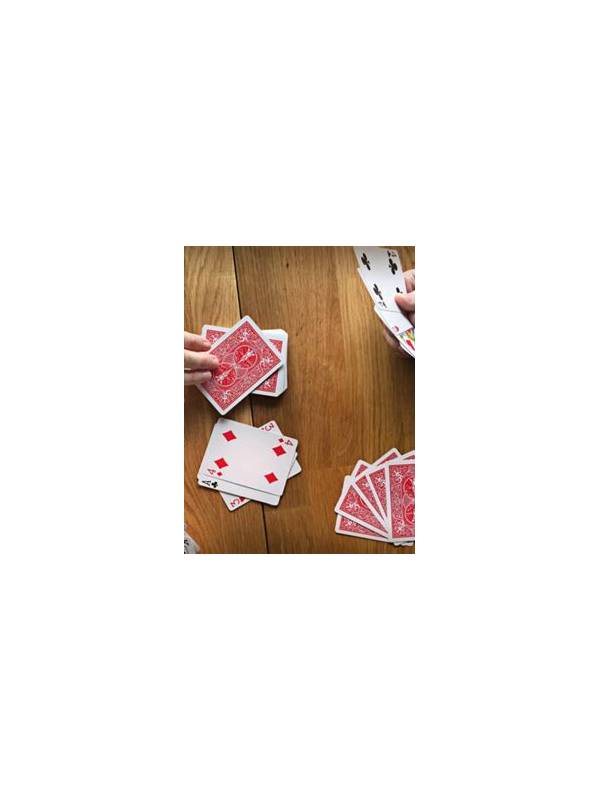
When two cards look equally disposable, choosing randomly can make practice difficult. A counterfactual comparison gives the decision a repeatable structure. You do not need exact probabilities. You only need to examine what each discard would leave behind and what kind of future it allows.
First, put one candidate aside mentally and imagine that it is gone. Look at the remaining cards without trying to improve them immediately. Do you have a clear sequence, a workable group, or several cards competing for the same role? Then perform the same check with the second candidate. The better discard often becomes visible when the remaining hand is viewed as a whole.
Now imagine one ordinary draw after each choice. For the first discard, list two or three cards that would help and one card that would create a new problem. Repeat for the second. This is not a claim about what will be drawn. It is a test of flexibility. A choice that leaves several useful routes may be stronger than one that creates a prettier arrangement but depends on a single card.
Include the cost of keeping information-rich cards. A middle connector can support several sequences, while a high singleton may have a larger point cost. Conversely, a connector that conflicts with your main plan may be less useful than its face value suggests. Evaluate fit, not reputation. The counterfactual should ask what the card does in this hand.
Finally, consider the opponent’s possible response without overreading it. If discarding one card would make your own plan obvious, note that as a small cost. Do not assume another player will take it or avoid it. Your primary comparison remains your hand’s stability.
After choosing, record one sentence: “I discarded A because it left more independent routes than B.” Later, compare the reasoning with the result. A sensible decision can lose, and a weak decision can work. Counterfactual review trains the quality of the choice rather than rewarding hindsight. Keep the comparison small enough to finish under pressure. Two candidates, two likely improvements, and one replacement cost are usually sufficient. If you start listing every possible sequence, return to the hand’s main requirement. The purpose is to expose the trade-off between the cards, not to manufacture certainty. With repetition, this method becomes a quick mental habit for close discard decisions. When two choices remain close, prefer the explanation you can state clearly. Clear reasoning is easier to test in later reviews than a vague feeling that one card looked better. This also reduces regret: you can revisit the assumptions without confusing the outcome with the decision.
Related Post
Rummy FAQ: When Is a Plan Too Complicated?
This FAQ offers signs that a rummy hand contains more competing plans than it can [...]
Rummy Comparison: Flexible Cards Versus Completed Groups
Understand the different jobs of flexible cards and completed groups when planning a hand. [...]