Rummy Tips: Distinguish a Near-Sequence From a Dead Pair
Recheck the assessment after every draw, because a new card can create a route that did not exist before.
A pair can feel valuable because two matching cards are already connected. In rummy, however, a pair is not automatically a strong building block. It may become a set, support a sequence, or remain stranded until the end. The useful question is not whether the cards match, but whether they have more than one practical route to completion.
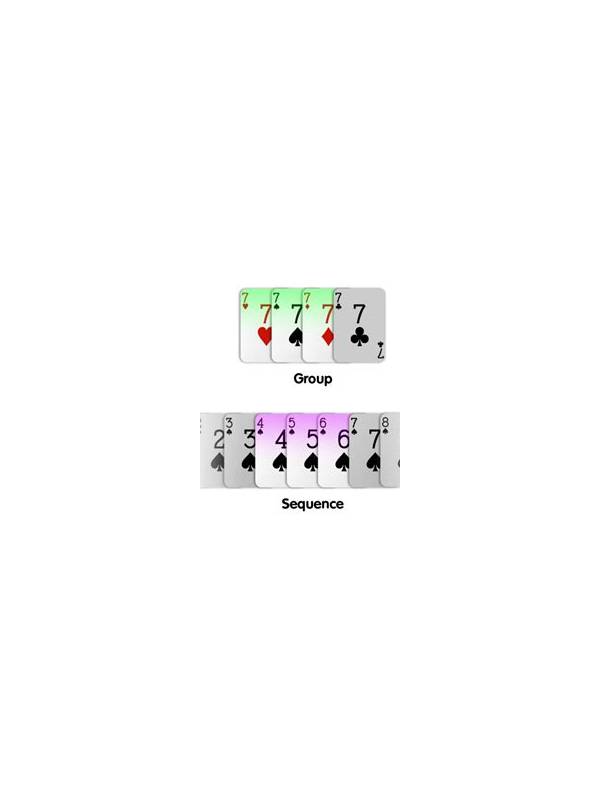
Begin with the suit and rank of the pair. A same-suit adjacent pair, such as a five and six, is a near-sequence because one or both neighboring ranks may extend it. A pair of the same rank in different suits has a different profile: it may become a set if another copy appears, but it usually offers less direct sequence potential. Keep these possibilities separate when evaluating the hand.
Give each pair a fit score using three checks. First, how many cards could improve it immediately? Second, can a useful group be made in more than one way? Third, does keeping it block a stronger group already forming elsewhere? A pair with several nearby cards and no serious conflict can earn another turn. A pair that needs one exact card while competing with a nearly complete sequence should usually be released.
Watch the cost of holding the pair. Every slot in your hand carries an opportunity cost, and a pair can quietly occupy two slots for many turns. If you keep drawing cards that do not fit, the pair may encourage you to postpone necessary discards. Set a review point after the next draw. At that point, ask whether the pair gained a route, lost a route, or stayed unchanged.
Jokers and wild cards can change the evaluation, but they should not hide a weak structure. A wild card may complete a group, yet using it on a narrow pair could be less efficient than reserving it for a group with greater certainty. Consider the whole declaration requirement before assigning a valuable flexible card.
A practical rule is to compare the pair with your worst unconnected card. If the pair has two credible completion routes and the lone card has none, keep the pair. If the pair is still waiting for one exact rank and another card can start a broader sequence, discard the weaker hope. This method keeps decisions grounded in fit, timing, and hand balance instead of the comfort of seeing a match.
Related Post
How to Compare Two Rummy Discards With a Simple Test
Use a three-part comparison to choose between two reasonable discard candidates. [...]
Rummy Safety: Check Permissions Before Installing a Game App
Reviewing app permissions and installation sources is a practical step before putting a new game [...]