Rummy Tips: Use the Opponent’s Discard to Test Your Assumptions
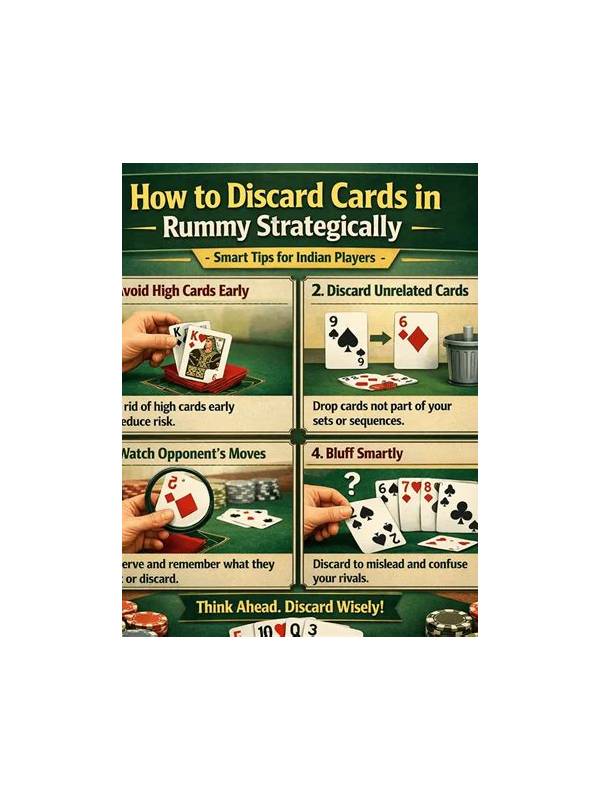
Every visible discard can tempt a player into a quick conclusion. A discarded seven may seem to reveal a missing run, while a rejected face card may appear worthless. The safer approach is to treat each discard as a test for your assumptions, not as proof of what another player holds.
First ask what the discard definitely tells you. It confirms that one copy was available and that the player chose not to keep it at that moment. It does not prove that the card was useless. The player may have had a legal alternative, been protecting a different suit, or simply chosen a low-risk discard from a crowded hand.
Compare the discard with your own hand. If it completes a broad possibility for you, calculate the cost of taking it. A useful card from the open pile can also reveal your interest and make your later choices easier to read. If taking it would force you to throw away a protected card, the visible opportunity may be less valuable than it first appears.
Watch patterns across several turns. One discard is noisy; repeated choices provide better information. Notice whether a player consistently rejects cards from one suit, avoids middle ranks, or takes from the open pile only when a card has a clear connection. These patterns still have alternative explanations, so use them to adjust priorities rather than to invent an exact hand.
Use the discard to challenge your own plan. Suppose you have kept a flexible six because it might connect in two directions. If related cards repeatedly appear and disappear without helping, the plan may be weaker than your imagination suggests. Conversely, a sequence of nearby discards can make a broad route more credible. Evidence should update the plan, not merely support the decision you already wanted to make.
Avoid copying the opponent’s discards mechanically. A card that is bad for one hand may be excellent for another. Your requirements, points, and remaining spaces are different. Before picking up, state the job the card will perform and the discard it will replace. If you cannot name both, leave it alone unless the format makes the pickup exceptionally safe.
After a session, review three visible discards and write two possible interpretations for each. This exercise trains you to keep uncertainty in the analysis. Strong observation in rummy is not perfect prediction. It is the ability to gather clues, compare them with your hand, and change direction without becoming attached to a story about the opponent.
Related Post
Rummy Guide: Separate a Useful Card From a Merely Attractive Card
A practical way to judge cards by the jobs they can complete rather than by [...]
Rummy Guide: Choose a Discard When Every Card Has a Job
When every rummy card seems useful, compare jobs, deadlines, and replacement cost to find the [...]