Rummy Comparison: Visible Melds and Private Hand Plans
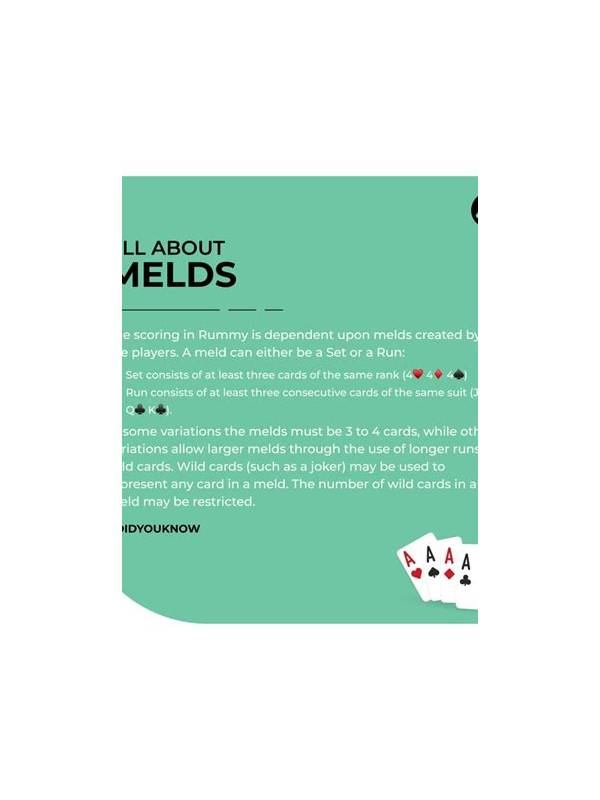
A visible meld and a private hand plan solve different problems. A visible meld confirms a completed structure and can reduce your own mental workload. A private plan preserves uncertainty for opponents and may keep several arrangements available. Compare them by security, flexibility, and information rather than by habit.
Visibility helps when a group is unquestionably legal and removing it from consideration makes the rest of the hand easier. It can also provide a clear record of progress in formats that allow or require shown groups. The benefit is practical: fewer cards remain ambiguous, so your next decisions can focus on the unfinished material.
Privacy helps when cards are still flexible or when revealing a pattern would make a scarce draw easier for another player to understand. Keeping a plan private does not make it stronger by itself. If the cards are actually narrow and your opponents already have enough clues, privacy may simply delay a useful commitment.
Think about the information released. A visible run can reveal suit and rank range. A set can show which ranks you may no longer need. Even a partial arrangement may influence how others read the table. Ask whether the security gained is worth making that information available at this stage.
Timing changes the comparison. Early in a hand, preserving options may matter more. Near the end, certainty and validation may matter more, especially when an invalid declaration would be costly. Follow the exact rules for what may be shown, rearranged, or used in a declaration; house and platform rules can differ.
Use a three-part check before showing a group: Is it legal? What does it secure? What does it reveal? If the first answer is uncertain, do not show it. If the second answer is small and the third is significant, privacy may be preferable. If it secures a difficult requirement and reveals little useful information, showing it may be efficient.
Review one visible and one private choice after a session. The goal is not to choose one style permanently but to learn when information has real value. Strong play treats visibility as a strategic resource, not merely a display preference. If you are playing a format with mandatory declarations or particular grouping syntax, learn those requirements before using a visibility strategy. A group that looks complete may not satisfy the final hand condition. Make the legal requirement the first filter, then weigh privacy and information. This order prevents a clever presentation choice from creating a preventable rules error.
Related Post
Rummy FAQ: When Should You Keep a Pair?
This FAQ explains how to judge a rummy pair by flexibility, timing, and the surrounding [...]
The Ultimate Guide to the Best Rum Apps for 2026
The Ultimate Guide to the Best Rum Apps for 2026 Are you a rum enthusiast [...]