Rummy Guide: Choose a Primary Plan and a Backup Plan
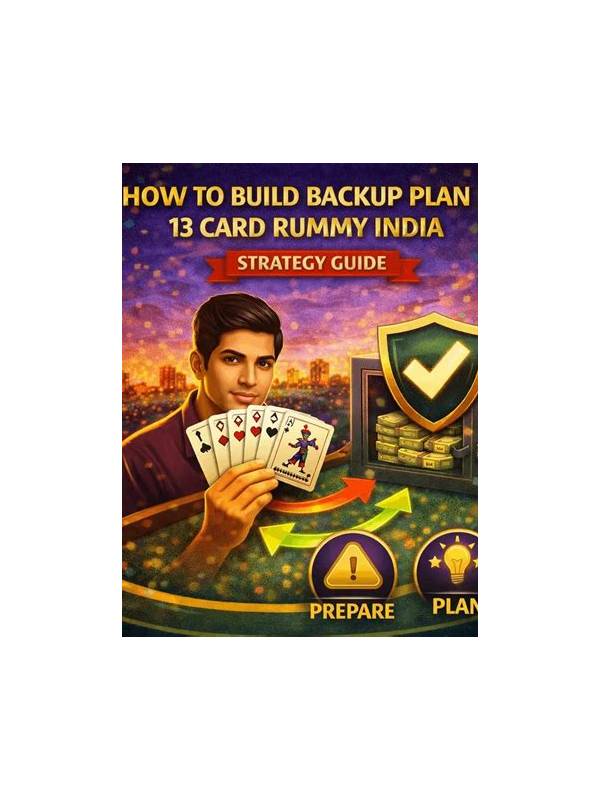
A hand becomes difficult when every possible combination is treated as equally important. Choosing a primary plan and a backup plan creates a simple hierarchy. The primary plan receives the strongest evidence and the most attention. The backup remains available only if it has a credible path and does not require damaging the hand.
To choose the primary, look for confirmed groups, several useful connectors, and a reasonable completion distance. Do not select a plan only because it looks attractive when sorted. A neat pair may still need an exact card, while a less obvious arrangement may offer more than one route.
Choose the backup by a different standard. It should protect you if the primary stalls, perhaps by reducing a high-cost card or creating a safer sequence. If the backup needs the same scarce card as the primary, it is not a true backup. It is a second description of the same hope.
Give both plans a release condition. The primary might be reviewed after an unhelpful draw; the backup might be abandoned if it gains no support by the next decision. Release conditions keep you from moving cards back and forth simply because you have already spent turns considering them.
When a new card arrives, compare the plans rather than asking whether it is “good.” Did it improve one route, both, or neither? If the backup becomes stronger, promote it deliberately. If neither plan has support, reset the hand and choose an objective based on current structure.
A plan hierarchy is a decision aid, not a prediction. The deck may still refuse to cooperate, and an opponent may finish first. Its benefit is that your choices remain explainable under uncertainty, which makes both play and later review calmer.
Keep the hierarchy visible in your language. Say, “Plan A needs one of three connectors; Plan B reduces a costly singleton,” rather than holding both ideas as vague hopes. If a card supports both plans, note that its release could damage either route. When the hand becomes crowded with unresolved cards, simplify by keeping the plan with the shorter completion distance or lower penalty. A backup is valuable only while it remains affordable.
If both plans become weak, do not invent a third plan immediately. Perform a clean reset and rebuild from confirmed groups.
Related Post
Rummy Tips: Recognize a Dead-End Draw Before It Costs a Turn
A dead-end draw has little support and few fallback uses, so identifying it early improves [...]
Rummy Strategy: Count Unused Cards in Each Candidate Group
Counting the cards that a plan leaves without a role helps distinguish efficient groupings from [...]