A Beginner Guide to Rummy Table Vocabulary
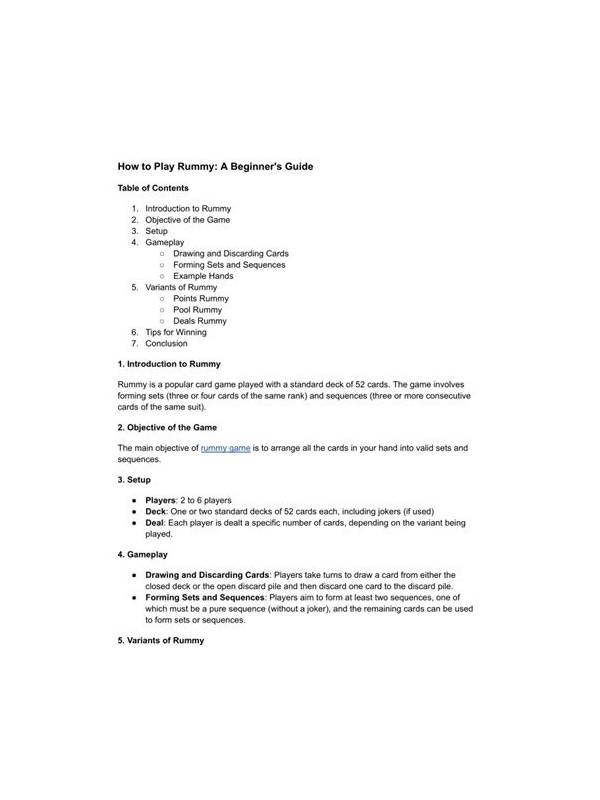
Rummy vocabulary can make a first online session seem more complicated than it is. Learning a few common terms gives beginners a useful map, while the platform’s own rule page remains the final authority for its format.
The draw pile, sometimes called the closed deck, is the face-down stack from which a player takes a card. The discard pile is the face-up stack where players place unwanted cards. A turn commonly consists of drawing one card, arranging the hand, and discarding one card, although the interface may present those actions in a different order.
A sequence is a run of consecutive cards from one suit. A pure sequence contains no joker substituting for a missing card. An impure sequence uses a joker under the applicable rules. A set is a group of cards with the same rank in different suits. These terms describe structure, not a guarantee that a hand is ready to declare.
A printed joker is the joker shown in the deck, while a wild joker is a card selected for that hand to act as a substitute. Some formats treat these details differently, so check the table rules. A declaration is the action that tells the system a player believes the hand is complete. The system may reject an invalid declaration and apply a penalty.
Points usually refer to the penalty value of cards left outside valid groups. Pool rummy, points rummy, and deals rummy use different ways to carry results forward. An entry fee, service charge, or prize display is a financial term, not a rule of card grouping. Read the terms before playing for money.
Finally, responsible-play controls may include deposit limits, session reminders, cooling-off periods, or self-exclusion. Knowing these words is as important as knowing “sequence.” If a term remains unclear, use practice mode or official support. Clear language leads to clearer decisions.
Vocabulary also helps you ask precise support questions. Instead of saying that a hand “looked wrong,” you can ask whether a specific group is a set, whether a joker may substitute in that position, or how an invalid declaration is scored. Precise questions receive better answers and make future table choices easier.
Write down unfamiliar terms in your own words after checking them. A short personal glossary is easier to revisit than a long rule page, but it should never override the current official wording. Recheck it when you switch formats or when the platform announces a rule update.
Related Post
Rummy FAQ: Why Does a Card Have an Opportunity Cost?
A card’s opportunity cost is the useful alternative you give up when you reserve it [...]
Rummy Guide: Distinguish a Blocked Route From a Slow Route
Knowing whether a plan is blocked or merely slow helps you decide when to continue [...]