Rummy Set Versus Sequence: A Decision Framework for Close Calls
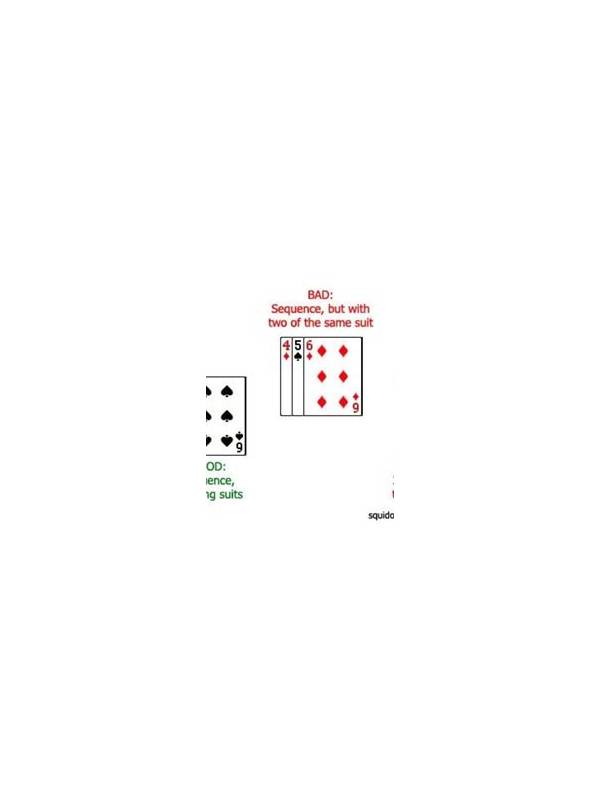
Rummy hands often contain a tempting choice: keep two cards that may join a set, or protect a sequence that is already taking shape. There is no universal answer because the value of each group depends on the rest of the hand. A decision framework can make the comparison less emotional and more specific.
Start with completion distance. A pair that needs one matching rank is close to a set, while two connected cards may need one or two exact suit-and-rank outcomes to form a sequence. Count what is missing instead of judging by appearance. A pair is not automatically better than a sequence, and a three-card run is not automatically safe if it blocks several other cards.
Now examine flexibility. A sequence may accept cards at either end, while a set generally needs a card of one rank from another suit. Some groups have several useful improvements; others have only one narrow route. Write down the practical improvements for each candidate. The group with more live possibilities can be more valuable even if it is not closer right now.
Consider requirement pressure as well. In many rummy formats, a valid declaration requires particular kinds of sequences. If your hand lacks a necessary natural sequence, protecting a set may be premature. Rules vary by platform and format, so confirm the current table rules before making a large commitment. A beautiful set cannot compensate for a missing requirement.
The discard pile provides another clue. If a card that would complete one plan has already appeared and is unlikely to return, reduce that plan’s priority. Do not treat one visible card as perfect information; several copies or unknown cards may remain. Still, public information should influence your estimate.
Finally, compare the cost of changing direction. If keeping the set forces you to discard a useful connector, the set may be expensive. If keeping the sequence leaves a high, isolated card untouched, the sequence may also create risk. Choose the option that improves the whole hand, not merely the group that looks most complete.
Use the framework in order: completion distance, flexibility, rule requirements, visible information, and whole-hand cost. This does not remove uncertainty. It gives uncertainty a structure, which is often enough to make close decisions calmer and more consistent.
If the comparison remains close, choose the option that is easier to reassess. A plan that leaves several ordinary draws useful gives you more chances to improve without a dramatic switch. That practical resilience can matter more than a small theoretical advantage that depends on one exact card.
Related Post
Rummy Guide: Use a Counterfactual Discard to Learn Faster
A counterfactual discard asks what another reasonable choice would have protected and improves review without [...]
Rummy Comparison: Written Rule Cards Versus In-App Help
Written rule cards and in-app help solve different problems when you switch between rummy variants. [...]