Rummy Comparison: Sequence Length Versus Route Reliability
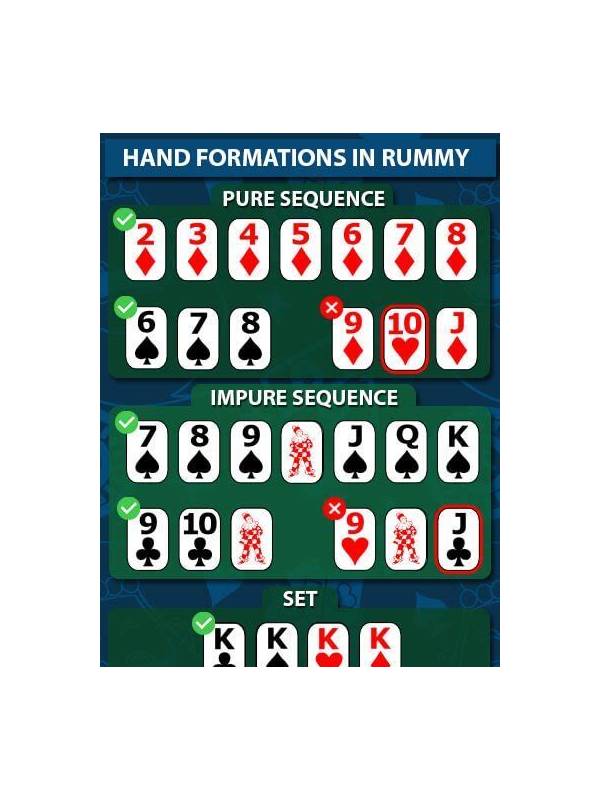
A longer possible sequence can look more attractive than a shorter one because it appears to solve more of the hand. However, length alone does not make a route reliable. A three-card sequence that needs one of several nearby cards may be healthier than a five-card idea that depends on a single missing card. Comparing length with reliability helps you avoid building around a beautiful but fragile plan.
First, count the cards already supporting each route. Then identify the exact cards still needed. Do not count every card that would be vaguely useful; count only cards that genuinely improve or complete the route. A route needing one of four possible cards has a wider path than one needing a single precise card, even if the second route would create a longer sequence.
Next, examine competition. A missing card may serve more than one route in your hand, which means the apparent reliability is lower than the count suggests. A route may also depend on holding a card that carries a large penalty if the plan fails. Add these costs to your comparison. Reliability includes both the chance of improvement and the consequences of waiting.
Information matters as well. If a needed card has already appeared in the discard pile and was not taken, that may change how you assess the route, although it does not prove the card is unavailable. Visible cards can narrow a plan, while an opponent’s deliberate pickup can warn you that a shared card may become harder to obtain. Keep observations separate from assumptions, and avoid treating one action as certainty.
When two routes are close, use a time limit. Give the longer route one or two turns to receive useful evidence. If it does not, downgrade it and protect the more dependable structure. This prevents sunk-cost thinking, in which you keep a weak plan simply because you have already held its cards for several turns.
The comparison is not a rule that shorter is always better. A long route can be excellent when it has several ways to develop and leaves low-risk cards outside it. The goal is to judge the whole route: required cards, competition, penalty exposure, and time available. Choose the plan that gives your hand the clearest next decision, not merely the plan with the most impressive final shape.
Related Post

Rummy Safety: Verify a Table Before Sharing Personal Details
Players should understand a table’s rules and privacy controls before entering personal or payment information. [...]
Rummy Comparison: Visual Notes or Mental Counting
Visual notes and mental counting each help in rummy, but the better method depends on [...]