Rummy Comparison: Single-Card Hopes Versus Multi-Route Value
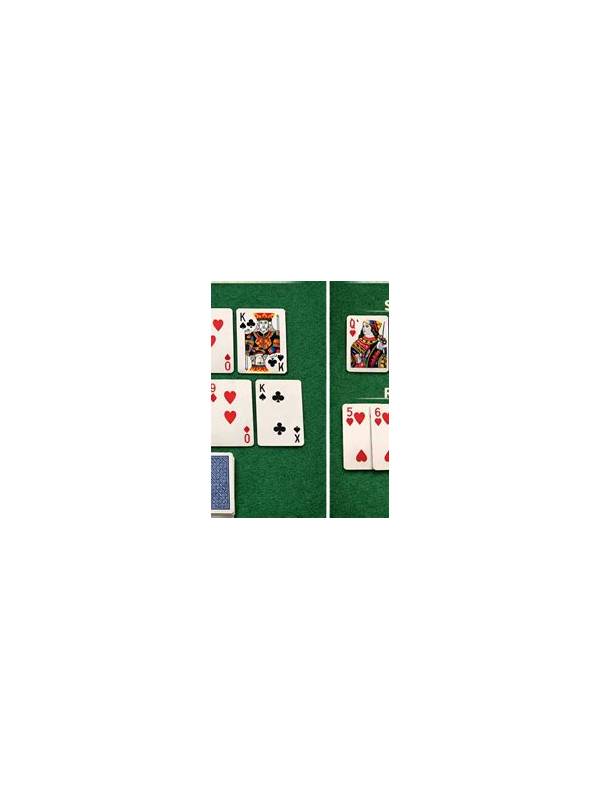
A card that completes one combination can feel more valuable than a card that merely keeps several options open. The comparison is not always simple. A narrow completion may be close and powerful, while a flexible card may never become part of a valid arrangement. The key is to compare the quality of routes, not only their number.
Begin with the exact requirement of the narrow hope. Does it need one rank in one suit, or could several cards complete it? Is the resulting combination valid immediately, or does it still leave a weakness elsewhere? A one-card improvement is attractive only when the surrounding hand remains safe after it arrives.
Now list the flexible card’s realistic uses. Count only routes that fit the rules and the cards already held. A card that can theoretically join six combinations but would require breaking a confirmed sequence is not truly flexible. Give priority to routes that improve structure without reopening settled work.
Information changes the comparison. A card seen in the discard pile may lower the practical value of a narrow hope. Conversely, a flexible card may be valuable because it can respond to several future signals. Do not claim certainty from unseen cards. Use the available evidence to describe one route as more or less credible.
Penalty matters too. If the narrow card is expensive to hold and the flexible card is low-risk, the safer option may deserve priority even when it offers less immediate excitement. In a scoring format, protecting the downside can be a form of progress. In any format, a hand that remains easy to review is easier to play well.
Make the choice by asking which card improves the hand under more than one plausible next event. That does not mean always selecting flexibility. It means recognizing when a single-card hope has become too fragile. Switch to the narrow route when its completion is well supported; keep flexibility when uncertainty remains high. Avoid using probability language you cannot support. You do not need an exact percentage to compare options. Say that one route needs fewer known cards, has lower penalty, or remains compatible with a confirmed structure. A flexible card can also lose value when held too long. Review it after each draw, and release it when a better arrangement is established. The strongest choice is often the one that leaves the hand easiest to explain on the next turn.
Related Post

Rummy FAQ: What Is a Route Conflict?
A route conflict occurs when one card is being counted as essential to two unfinished [...]
Rummy Guide: Measure Progress by Fewer Unresolved Cards
Counting unresolved cards gives practice a clearer progress measure than counting wins alone. [...]