Rummy FAQ: What Makes a Backup Route Realistic?
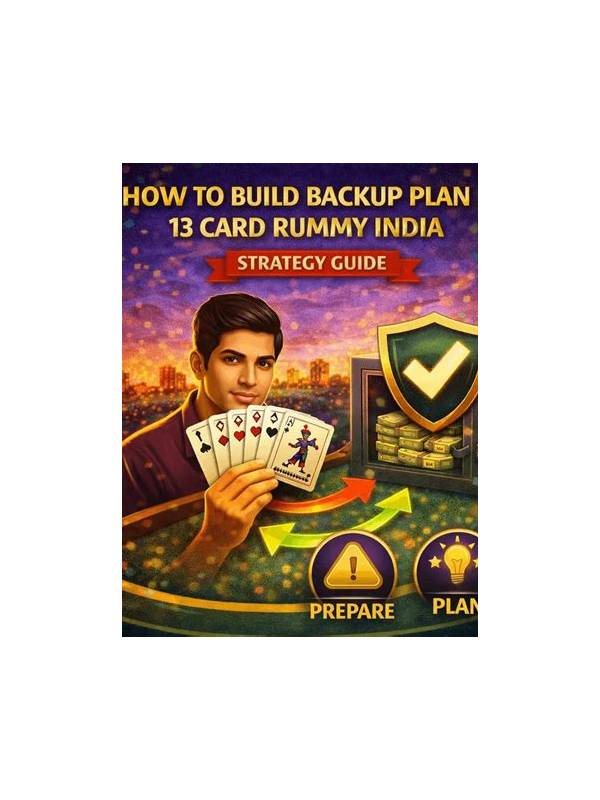
A backup route is useful only when it can actually become a legal finish. Players sometimes call any second pair a backup, but a pair with one exact missing card and no alternatives is closer to a gamble. Realistic backups have support in the current hand and do not require the main route to be destroyed immediately.
Check the number of improvements first. A connected pair in a suit may accept more than one nearby card, while a matching pair may depend on fewer cards. Count the useful outcomes rather than the attractive possibilities. If several cards would help, the route has resilience. If only one card works, mark it as speculative and avoid building the entire hand around it.
Check compatibility next. Can the backup share a flexible card with the main route without creating a conflict? Can you keep it for a turn while still reducing a loose card? A route that forces you to retain several expensive cards is not a comfortable backup. It may be better to choose a simpler route with fewer moving parts.
Finally, consider time. Early in the hand, an imperfect backup may be sensible because there are many draws left. Near the end, the route should be close to completion or it should be abandoned. The same cards can move from “reasonable backup” to “unnecessary distraction” as the number of turns changes.
Review the backup whenever the main route improves or fails. If the main plan becomes strong, the backup can be reduced to one flexible card. If the main plan stalls, the backup should be promoted only when its evidence is better. A realistic backup gives you an exit from uncertainty; it does not multiply uncertainty by giving every pair equal status. A route may also become realistic when it improves the hand in stages. One card can create a pair, and a second card may then complete a group; that sequence is more credible than a route requiring three unrelated draws. Look for these intermediate improvements. A backup that makes the hand better even before it finishes is usually safer than one that offers value only at the final moment.
Keep the backup visible but quiet. You should know what card would promote it, yet you should not let that single target dominate every discard. If the main route offers a stronger improvement, take it. If the backup gains a second connection, reconsider its rank. This flexible attention lets the route grow from evidence instead of being maintained through wishful thinking.
Related Post

Rummy Hand Mapping With a Three-Column Layout
A simple visual layout can make changing rummy possibilities easier to compare before every discard. [...]
Rummy FAQ: Why Do Middle Cards Offer More Connections?
Middle cards often connect to more neighboring ranks, but their usefulness still depends on suit, [...]