Rummy FAQ: When Should a Joker Replace a Natural Card?
Why is joker placement difficult? A joker can complete more than one possible arrangement, so using it in the first available gap may waste flexibility. Its best role depends on the rules, the required combinations, and the cards that remain ungrouped.
Should I use a joker to complete the nearest group? Not automatically. Compare the completed group with the alternatives. If the joker completes a required pure or natural sequence, that may be its strongest use. If it merely finishes a low-value set while leaving a difficult sequence unresolved, keeping it flexible may be better.
What does flexibility mean here? A flexible joker can support several realistic arrangements without breaking a requirement. For example, it might connect neighboring cards in one suit or complete a same-rank group. The alternatives must be plausible; a joker is not valuable just because you can imagine many theoretical placements.
When should I commit it? Commit when the placement reduces a major structural problem, protects you from a likely penalty, or leaves the rest of the hand easy to arrange. Late in a hand, certainty usually matters more than preserving every option. If a declaration is close, a stable valid arrangement can be worth more than an uncommitted joker.
Can moving a joker change the value of a group? Yes. Some rule sets distinguish natural sequences, pure sequences, and groups that include wild cards. Always check the active variant before assuming an arrangement qualifies. A joker that appears to finish the hand may not satisfy a specific requirement.
Before deciding, compare at least two placements. For each one, ask what requirement it solves, what cards remain loose, and what future draws it leaves available. If both placements are similar, choose the one that reduces the number of high-value ungrouped cards. Afterward, make a note of the reason so you can review whether the joker improved the hand as expected. The central principle is simple: use a joker to solve the most important constraint, not merely the most visible gap.
It is also useful to distinguish a joker that improves structure from one that only reduces anxiety. A hand can feel safer when a joker is placed, even if the placement leaves several awkward cards behind. Before committing, name the remaining problem out loud or in a note. If the problem is still large, preserve the joker or move it to a placement that addresses the constraint directly.
Related Post
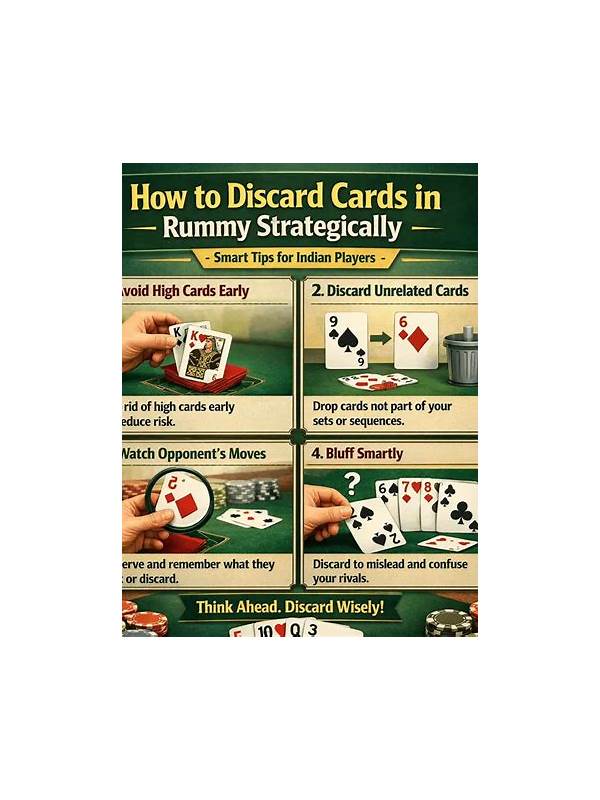
Rummy Strategy: Treat the Final Discard as Part of the Plan
The card you release at the end of a turn can affect point risk, information, [...]
Rummy Tournament Entry Checklist for a Calm Start
A pre-entry checklist reduces avoidable mistakes before joining a timed rummy tournament. [...]